

The large-scale study covered 164,000 employees across 1,111 companies. Researchers analyzed 443 million working hours, comparing employees’ digital activity during the six months before and after the introduction of AI tools.
What the data showed
ActivTrak found that artificial intelligence increased workload across almost every category:
- time spent on communication in email and messaging apps more than doubled;
- use of business systems such as HR and accounting software jumped by 94%;
- the duration of focused, uninterrupted work, including coding and strategic planning, fell by 9%.
“It’s not that AI fails to create efficiency. It’s just that any freed-up capacity is immediately redirected to other work. That’s where the invisible spread of tasks begins,” Gabriela Mauch of ActivTrak explained in comments to The Wall Street Journal.
The statistics also challenge the theory that AI reduces working hours. On average, AI users work eight minutes longer than colleagues who do not rely on the new tools.
Adoption dynamics
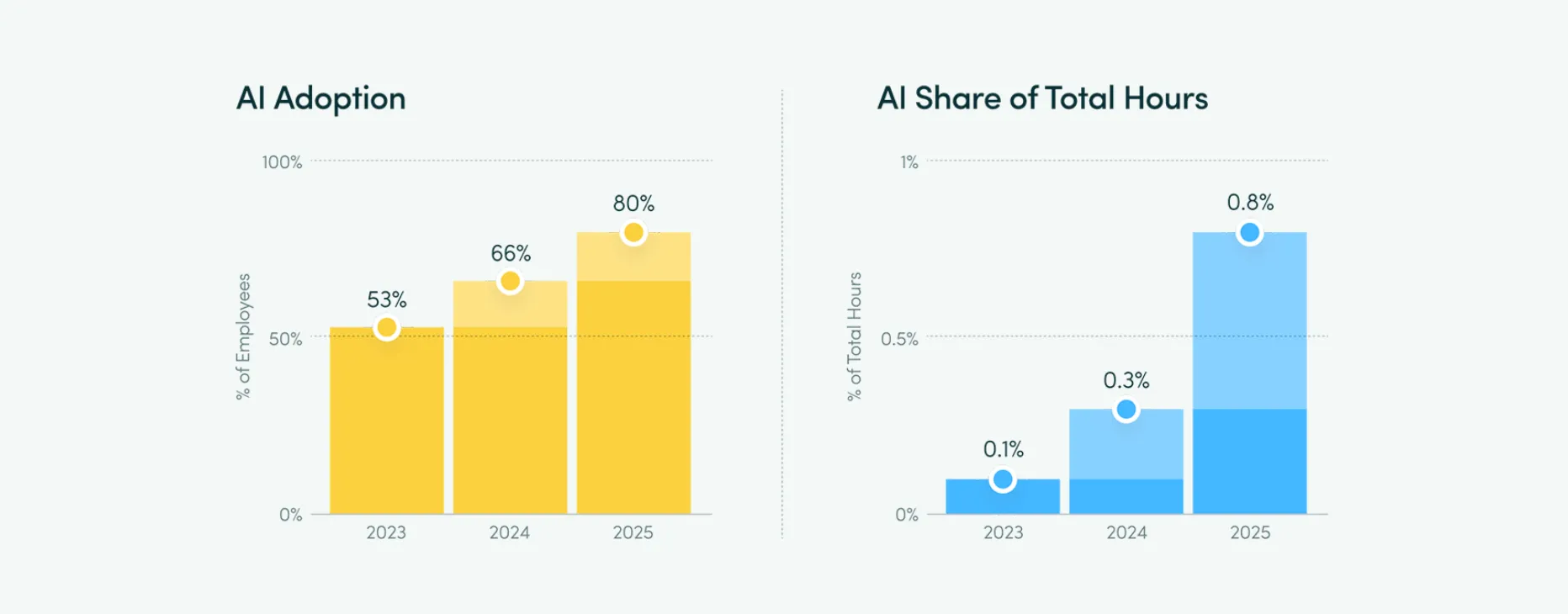
The share of employees using artificial intelligence increased from 53% to 80%. Time spent working with AI rose eightfold.
Since January 2024, the average audience retention rate has stood at 92%, and the figure has never dropped below 88%. Nearly 40% of users have engaged with the technology for 13 months or longer.
For comparison, only 9% used AI for just one month. However, even with near-universal adoption, there is still no confirmation that neural networks are freeing up working time.
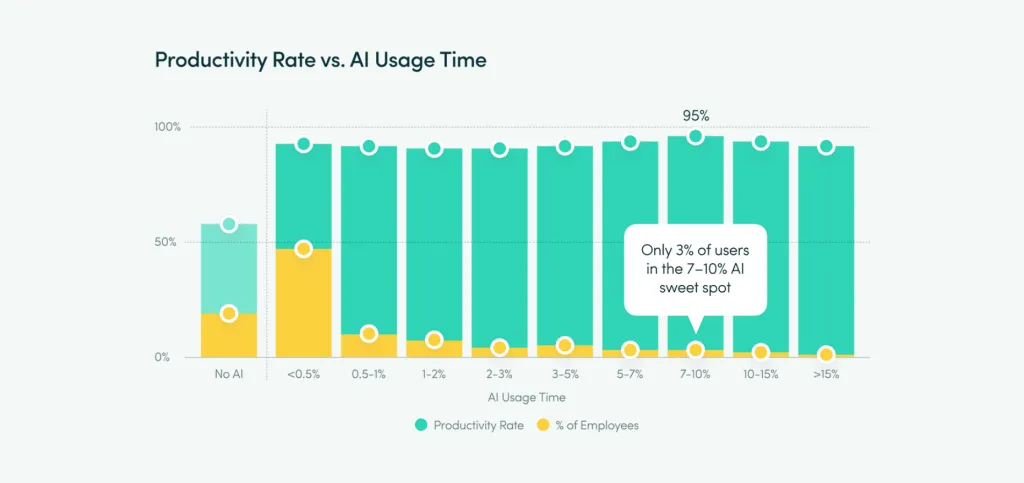
The highest productivity is seen among those who spend 7–10% of their working time on artificial intelligence, but this group represents only 3% of users. Most people use AI for just 1% of their time.
Most popular tools
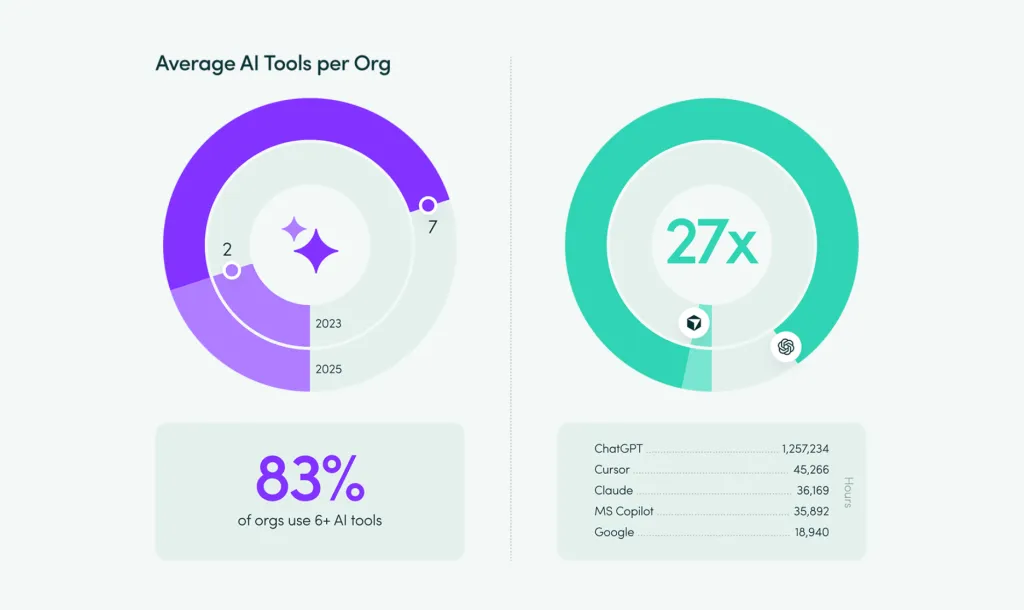
In 2023, companies used an average of two AI tools, but by 2025 that number had grown to seven. At the same time, 83% of organizations now use six or more solutions. Instead of consolidating around a few platforms, the opposite is happening — the tool stack continues to expand.
ChatGPT remains the leader in usage time, surpassing its nearest competitor, Cursor, by 27 times. The site chatgpt.com climbed from 19th to fifth place among the most visited websites, increasing its annual audience by 145%.
It is worth noting that similar observations were shared in February by Harvard Business Review. Experts tracked changing employee habits for eight months at a U.S. technology company with a workforce of around 200 people.
 ES
ES  EN
EN