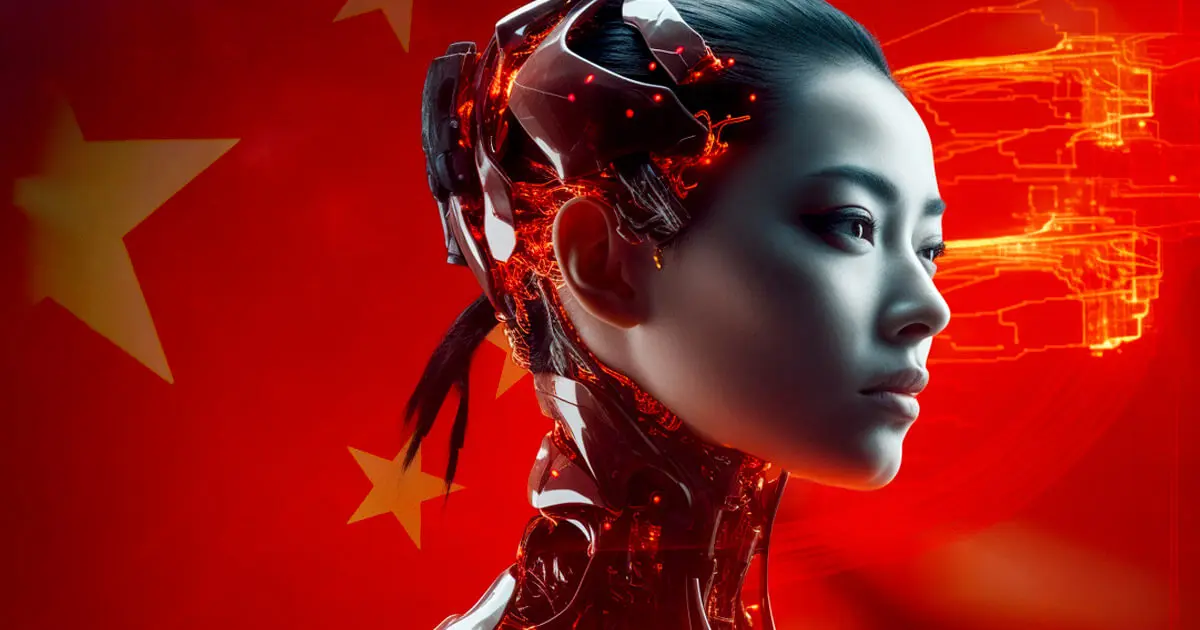

More than 600 million people in China have already used one AI-powered application or another. The pace at which the technology is being integrated into everyday life is remarkable, according to The Economist.
“The country is rapidly moving toward a future in which artificial intelligence will choose, buy and deliver many goods and services, radically transforming the digital economy,” the article says.
The publication notes that, in order to have coffee delivered to an office in Shanghai, it is enough to ask one of the apps to choose a drink on behalf of the user and confirm the order — after which it immediately begins its journey.
However, outsourcing such decisions also comes with risks. When a journalist from The Economist asked for a “special” coffee, they received a drink flavored with vinegar and rose petals.
The third era of the internet
Chinese internet users have already lived through two major stages of internet development:
- since the early 2000s, most users relied on the Baidu search engine;
- after Google left the Chinese market at the end of the decade, Baidu became a monopolist and began aggressively monetizing its services, which caused user dissatisfaction. With the spread of smartphones, people moved into superapps — applications combining shopping, entertainment, communication and payments.
As a result, major technology companies such as Alibaba, ByteDance and Tencent now have extensive portfolios of digital services and logistics networks that can be used to develop autonomous solutions for a wide range of user tasks.
Any of these tech giants could become the leader of the new era of the Chinese internet. The chaotic battle in the AI sector has already begun, The Economist writes.
On May 11, Alibaba fully integrated its Qwen chatbot into the Taobao shopping app. Thanks to this, users can purchase various goods and services using simple commands.
ByteDance is preparing a similar release — the integration of Doubao with Douyin.
Tencent has become the dark horse in this race. Its investments in AI models were initially modest, but over the past six months the company has completely reorganized the work of its artificial intelligence team.
The company’s new model, Hy3, is currently being tested and is showing strong results. Tencent is gradually integrating it into WeChat.
AI-powered superapps
AI-based superapps could become an attractive source of growth during a period of weak consumer spending in China.
The adjusted operating profit of Alibaba’s Chinese e-commerce division fell by 40% year-on-year in the first quarter of 2026. The company’s cloud business is thriving, but this growth requires enormous capital investment.
Chinese tech giants claim that their AI-powered superapps do not promote advertised products. However, they may eventually have to change this policy, The Economist notes.
A defensive element
Chinese companies may fear the emergence of AI-powered devices with agentic functions built directly into the operating system, which could push superapps aside.
OpenAI is working on such a gadget. The new product is said to be capable of fully understanding the user’s surroundings and daily life. It is unobtrusive, can sit in a pocket or on a desk, and could become “the third core device after the MacBook Pro and iPhone.”
ByteDance attempted a similar release in December by launching, together with electronics manufacturer ZTE, a smartphone with a preinstalled AI assistant. The project failed partly because Alibaba and Tencent blocked its access to their payment platforms.
In March, Xiaomi announced the release of new AI models that will be integrated into smartphones and cars. Huawei may also enter this competition.
As the Chinese internet enters a new era, a fierce battle for dominance is looming over it, The Economist concluded.
Сonclusion:
China’s internet market is entering a new competitive phase where AI assistants may reshape how users search, shop and interact with digital services. The main battle will likely unfold between superapp ecosystems and new AI-powered devices with built-in agentic functions.



 ES
ES  EN
EN