According to Axios, Disney sent ByteDance a cease-and-desist letter on Friday. The allegation is that the new video model Seedance 2.0 comes with a “pirated library” of Disney characters such as Spider-Man, Darth Vader, and Baby Yoda, treating them as if they were freely available clip art. Disney attorney David Singer described the situation as a “virtual smash-and-grab” of Disney’s intellectual property.
Users are already widely sharing videos generated with Seedance across social media. Among them is a short clip titled “The Lord of the Rings in 15 Seconds,” demonstrating how easily protected characters and fictional worlds can be recreated with the tool.
The actors’ union SAG-AFTRA, which represents around 160,000 actors, voice performers, stunt professionals, and other media workers, has also condemned Seedance 2.0. The union says the tool uses the voices and likenesses of its members without consent, threatening their livelihoods.
According to SAG-AFTRA, Seedance 2.0 disregards laws, ethics, industry standards, and basic principles of consent. “This is unacceptable and undermines the ability of human talent to earn a living,” the union wrote.
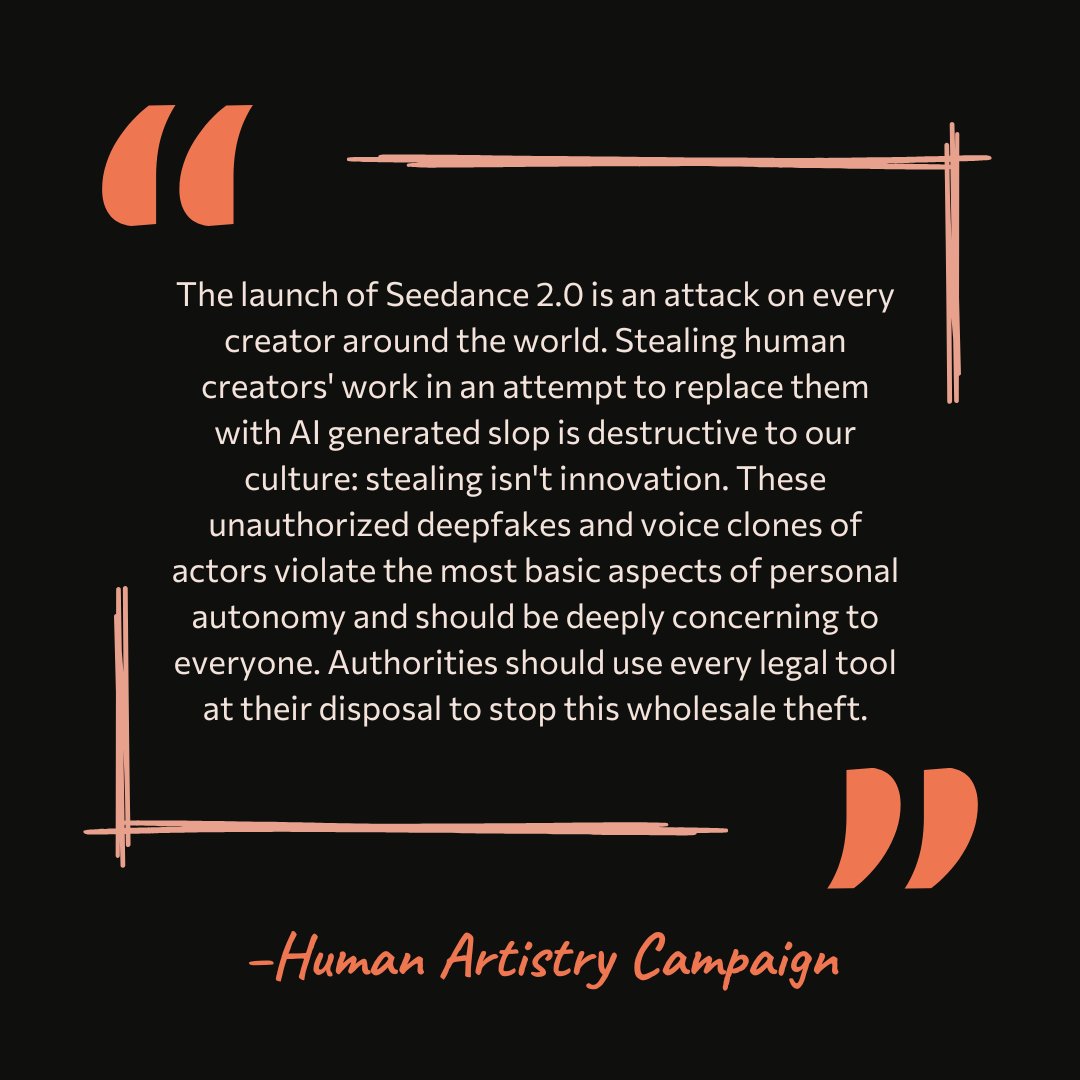
The Human Artistry Campaign, a coalition of dozens of creative organizations including SAG-AFTRA and the Directors Guild of America, has called on authorities to “use every legal means to stop this mass theft.” The Motion Picture Association has also urged ByteDance, according to Axios, to immediately halt the alleged infringements.
Disney’s expanding legal offensive against AI companies
The cease-and-desist letter is part of Disney’s broader legal campaign against AI companies. The entertainment giant has already sued Midjourney and the Chinese AI firm MiniMax, and has successfully taken action against Character.AI and Google. Disney is not opposed to AI per se — as long as it can participate. The company works with OpenAI, is the first major licensing partner for OpenAI’s video platform Sora, and has invested $1 billion in OpenAI.
However, taking legal action against ByteDance may prove difficult. Copyright lawyer Andres Guadamuz notes that after being forced to exit the U.S. market, ByteDance no longer appears to have a known U.S. presence; only a subsidiary in the Cayman Islands can be identified.
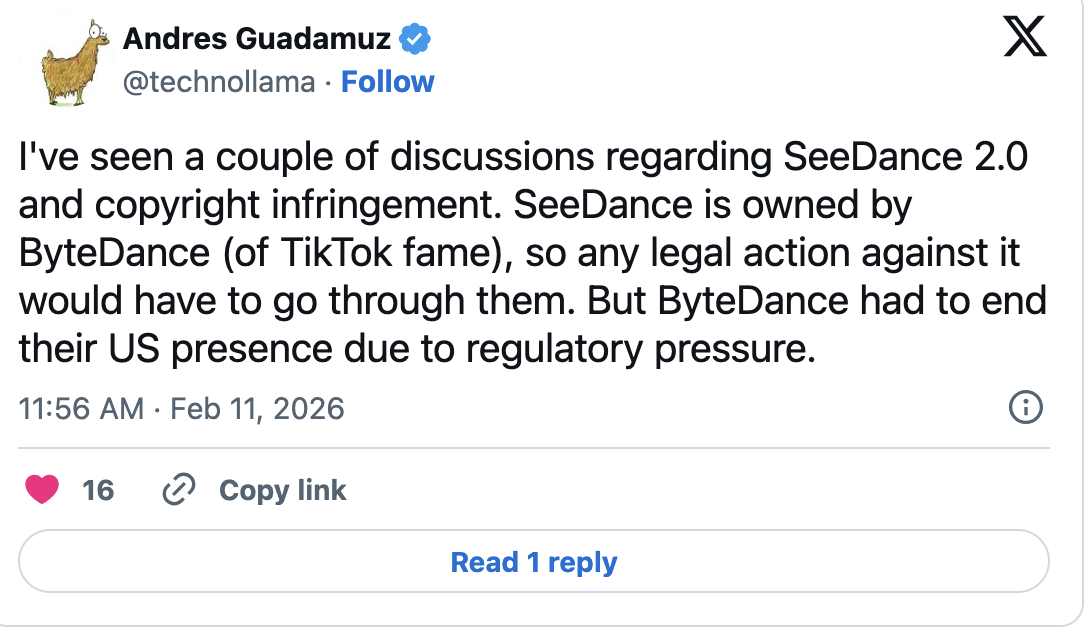
ByteDance could technically be sued, but it could also simply ignore the lawsuit. Any resulting default judgment would be ineffective unless it could be enforced in a country where ByteDance holds assets.
The conflict around ByteDance’s Seedance 2.0 highlights how rapidly advancing generative video models are colliding with copyright law and creative labor protections. Hollywood’s coordinated response shows that rights holders are no longer willing to tolerate large-scale AI reuse of protected characters and voices. The case also underscores how jurisdictional limits complicate enforcement against non-US AI developers.
 ES
ES  EN
EN