

According to The Block, the figure exceeded $100,000.
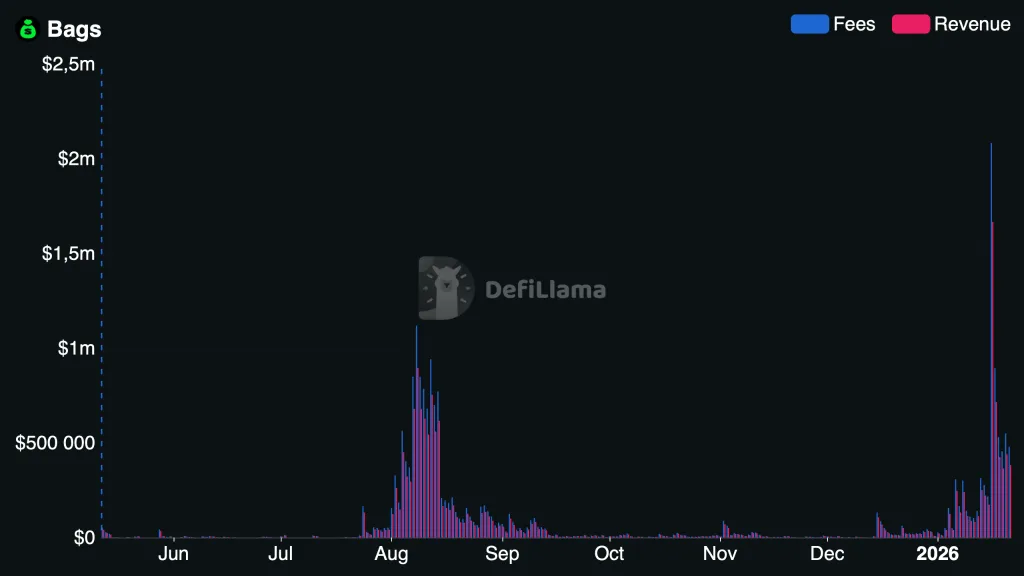
Back in December, the platform’s average daily fee volume stood at around $640. Since then, however, Bags has surpassed Pump.fun in the number of tokens launched.
Bags is a Solana-based platform for creating digital assets linked to internet trends and software projects. Recently, it has gained strong traction among open-source AI projects.
Growing interest in the platform correlates with positive momentum across the Solana blockchain. Over the past two weeks, the number of transactions and active addresses on Solana has surged by nearly 50%.
The Speculation Model
The surge in demand for Bags mirrors the broader rally in Solana. As soon as a particular AI repository or utility gains widespread attention, it quickly enters the radar of speculators.
Users launch tokens tied to trending AI repositories. In some cases, project creators officially acknowledge the token, effectively branding it as affiliated. Once this happens, trading fees begin flowing directly to the developer’s wallet.
Markets interpret this as legitimization, often triggering a sharp price increase.
Traders attempt to anticipate which AI projects are most likely to be officially endorsed, positioning themselves early.
However, token sustainability depends on whether developers convert speculative tokens into supported assets and continue development. Without that commitment, collapse becomes inevitable.
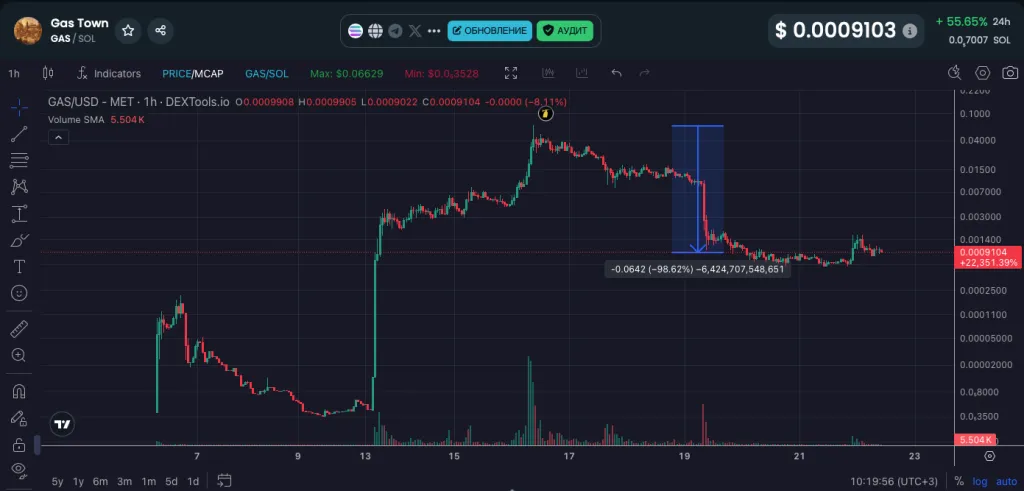
A clear example is the GAS token. Initial developer support pushed its market cap from $4 million to $60 million, but it later crashed below $1 million following public criticism from the project’s creator.
Claude Code Becomes a Major Trend
Claude Code is rapidly gaining traction. By July 6, 2025, it had already been used by 115,000 developers, generating 195 million lines of code in a single week.
Anthropic notes that AI assistants significantly accelerate development workflows and automate routine tasks.
Key Findings from the Report:
-
79% of Claude Code interactions were automation-driven, where the AI independently writes code and fixes bugs.
-
The most common use cases involve frontend development and layout work (JavaScript, HTML, CSS).
-
The tool is more popular among startups than large enterprises.
Claude Code is also being praised as an ideal solution for vibe coding. User lukaslalinsky shared his experience:
“There is a learning curve. You need to learn how to provide proper context, break tasks into parts, and of course, you need to know how to code.”
 ES
ES  EN
EN