

On its Hugging Face card, the model is listed as a text generation model for English and Chinese. Its size is 753 billion parameters.
GLM-5.2 supports several levels of “reasoning intensity,” allowing users to choose between quality and latency. The architecture also includes IndexShare and an updated MTP layer for speculative decoding.
According to the developers, IndexShare reuses one indexer for every four sparse attention layers and reduces the number of operations per token by 2.9 times. The MTP update increases the acceptance length to 20%.
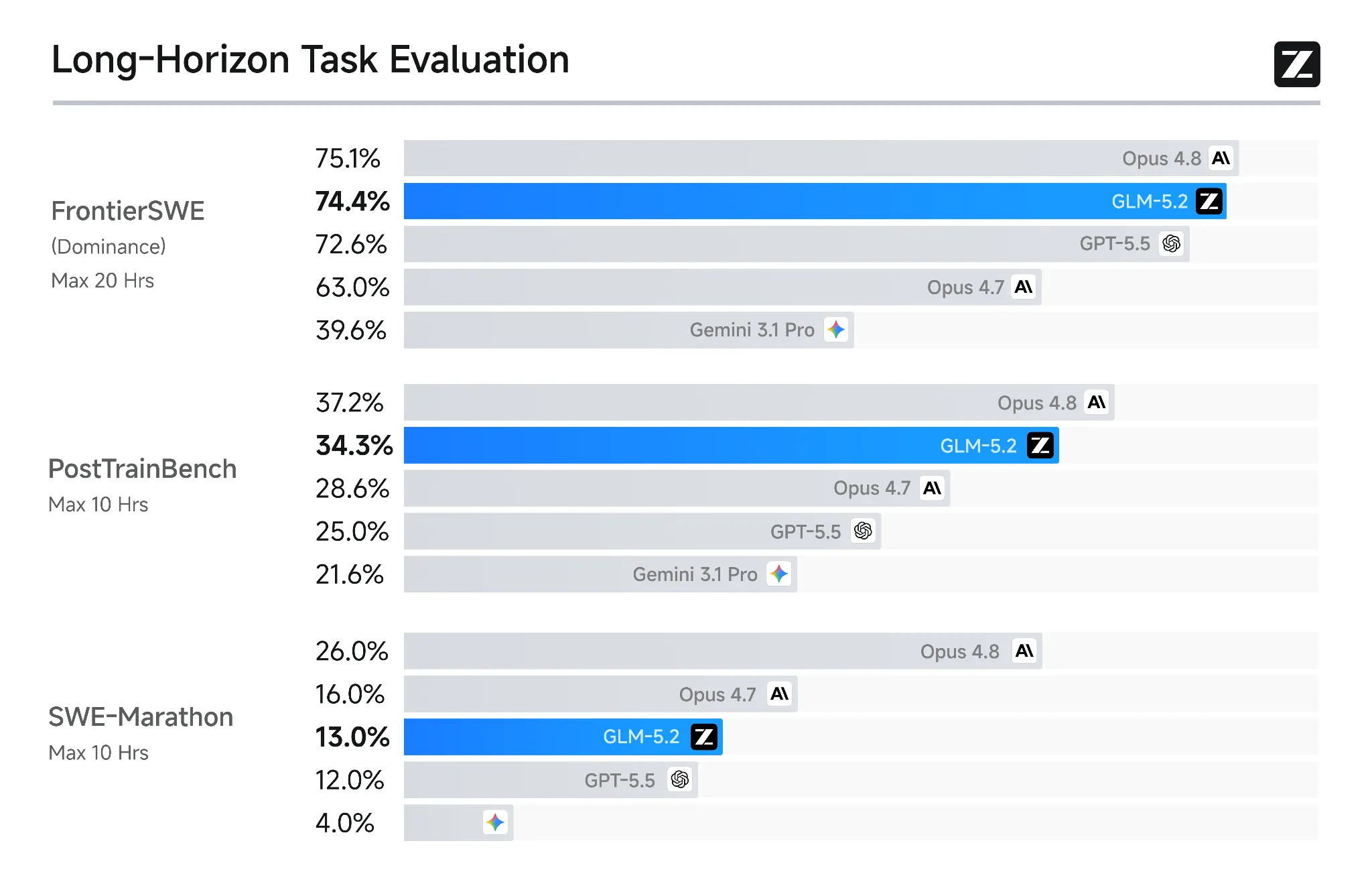
In three key benchmarks — FrontierSWE, PostTrainBench, and SWE-Marathon — GLM-5.2 outperformed other open-source models.
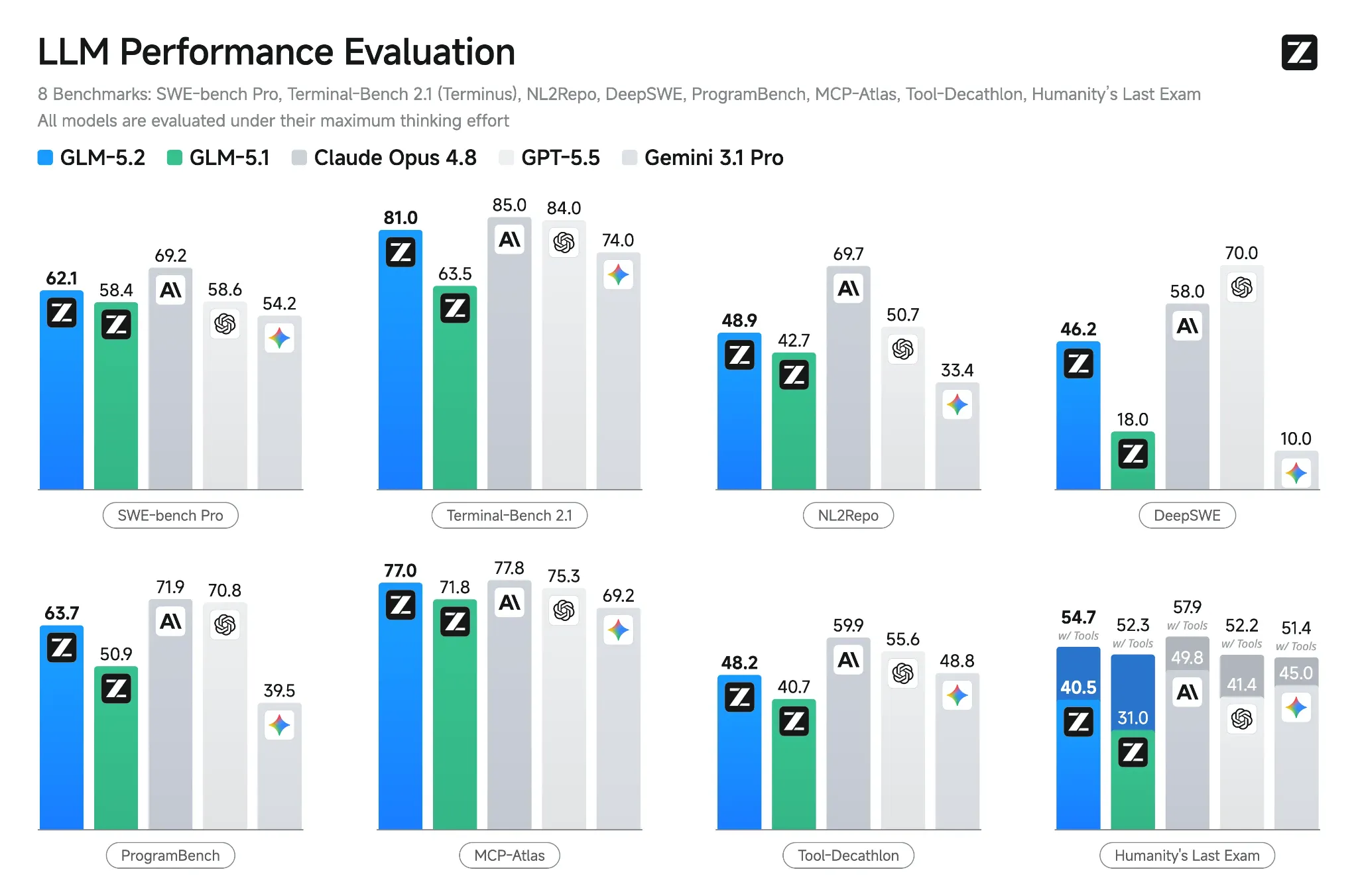
In standard programming performance tests, GLM-5.2 also became the most powerful open-source model.
GLM-5.2 is distributed under the open MIT license. For local deployment, support is declared for SGLang, vLLM, Transformers, KTransformers, and Docker Model Runner. Quantizations are available for llama.cpp, Ollama, and LM Studio.
Conclusion:
GLM-5.2 strengthens China’s position in the open-source AI race by combining a large context window, agentic task support, programming performance, and local deployment options.
You can also explore our ranking of leading AI platforms on our website, where you can compare different solutions and choose the one that best fits your needs: Best AI Platforms
 ES
ES  EN
EN