
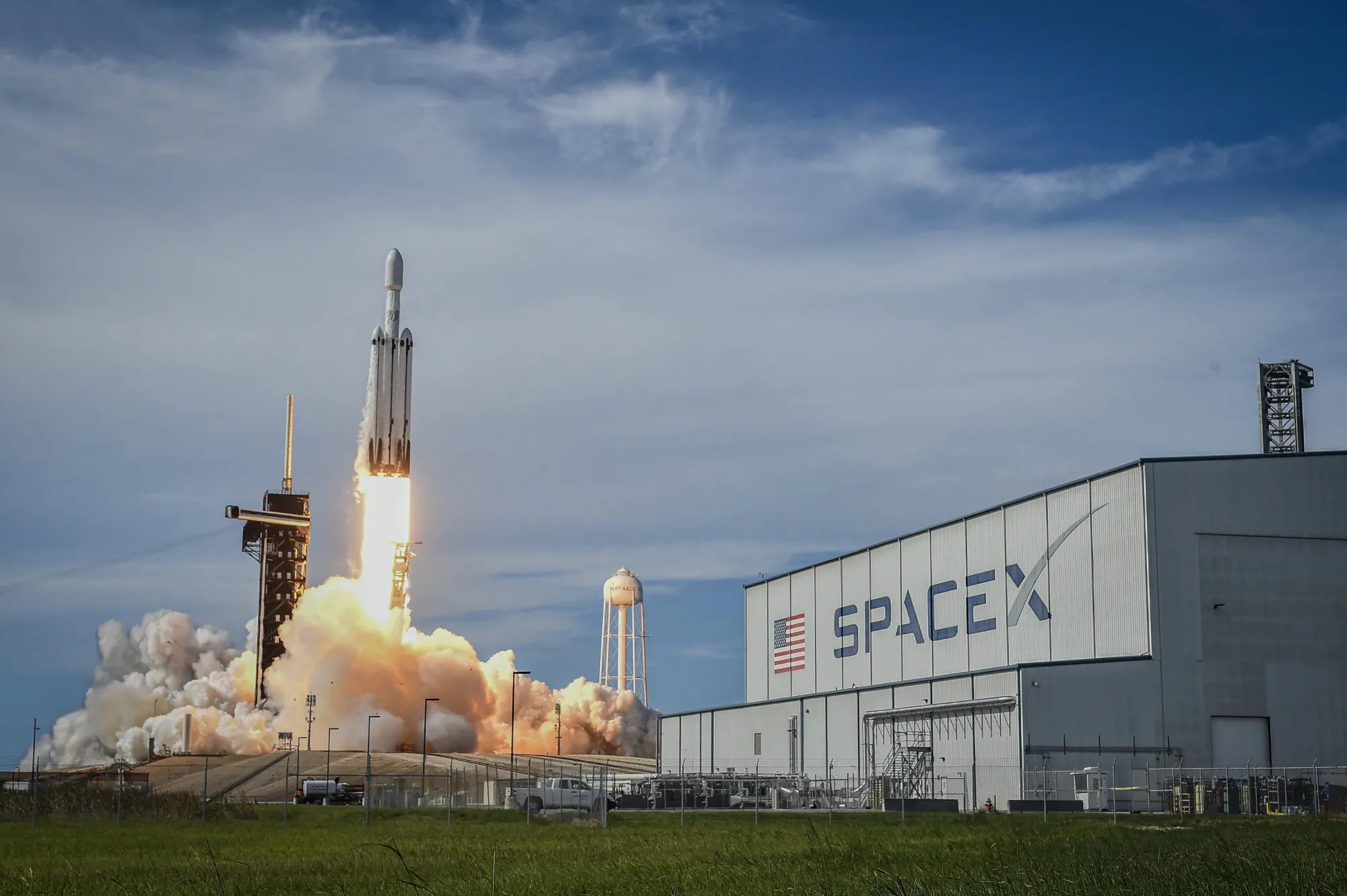
SpaceX has announced the acquisition of xAI. According to reports from Bloomberg and The Wall Street Journal, the transaction values the combined entity at $1.25 trillion, with $1 trillion attributed to SpaceX and $250 billion to xAI.
The deal is structured as a stock swap: xAI shares will be converted into 0.1433 shares of SpaceX. Employees will be able to sell their xAI shares back to the company, according to an internal email seen by The Wall Street Journal. SpaceX shares are valued at roughly $527 each—up sharply from the $421 per share valuation targeted during a secondary sale in December.
According to Bloomberg, SpaceX still plans to go public later this year. The IPO could raise up to $50 billion, potentially making it the largest public offering in history.
Orbital data centers as the official justification
Musk argues that the world’s growing demand for AI computing cannot be met by terrestrial data centers without “burdening communities and the environment.” His proposed solution is space-based AI infrastructure powered by solar energy.
He believes that orbital AI computing could become the most cost-effective option within two to three years. While the concept of space-based data centers has also drawn interest from figures like Jeff Bezos and Sam Altman, it remains largely unproven and presents enormous technical and financial challenges.
SpaceX plans to deploy a constellation of up to one million satellites designed to function as orbital data centers and has already filed the necessary application with the U.S. Federal Communications Commission (FCC).
SpaceX previously invested $2 billion in xAI. Last week, Tesla committed an additional $2 billion, and in January xAI closed a $20 billion funding round at a valuation of $230 billion.
xAI is burning $1 billion per month
Behind the cosmic narrative lies a more grounded financial reality. According to Bloomberg, xAI is burning approximately $1 billion per month. Unlike competitors such as OpenAI or Anthropic, xAI generates little direct revenue. The company trains large language and image models and operates the Grok chatbot, which is integrated into Musk’s social platform X.
A recent survey by venture capital firm Andreessen Horowitz, covering 100 CIOs at large enterprises, underscores this challenge. In the enterprise AI market, OpenAI dominates with 78% usage, followed by Anthropic at 44%, with Microsoft and—at a distance—Google also present. xAI does not appear in the data at all.
That leaves Grok subscriptions on X as xAI’s primary revenue source. No figures have been disclosed—but if they were competitive with ChatGPT or even Google Gemini, they would likely already be public.
The merger with SpaceX may offer xAI an alternative funding pathway, as well as indirect access to public markets via SpaceX’s planned IPO. At the same time, it further tightens the integration of Musk’s corporate empire. Last year, he already merged xAI with X in a $33 billion deal, continuing a strategy of consolidation across his ventures.
 ES
ES  EN
EN