

Over the past 24 hours, Bitcoin’s hashrate declined from 1,002 EH/s to 992 EH/s.
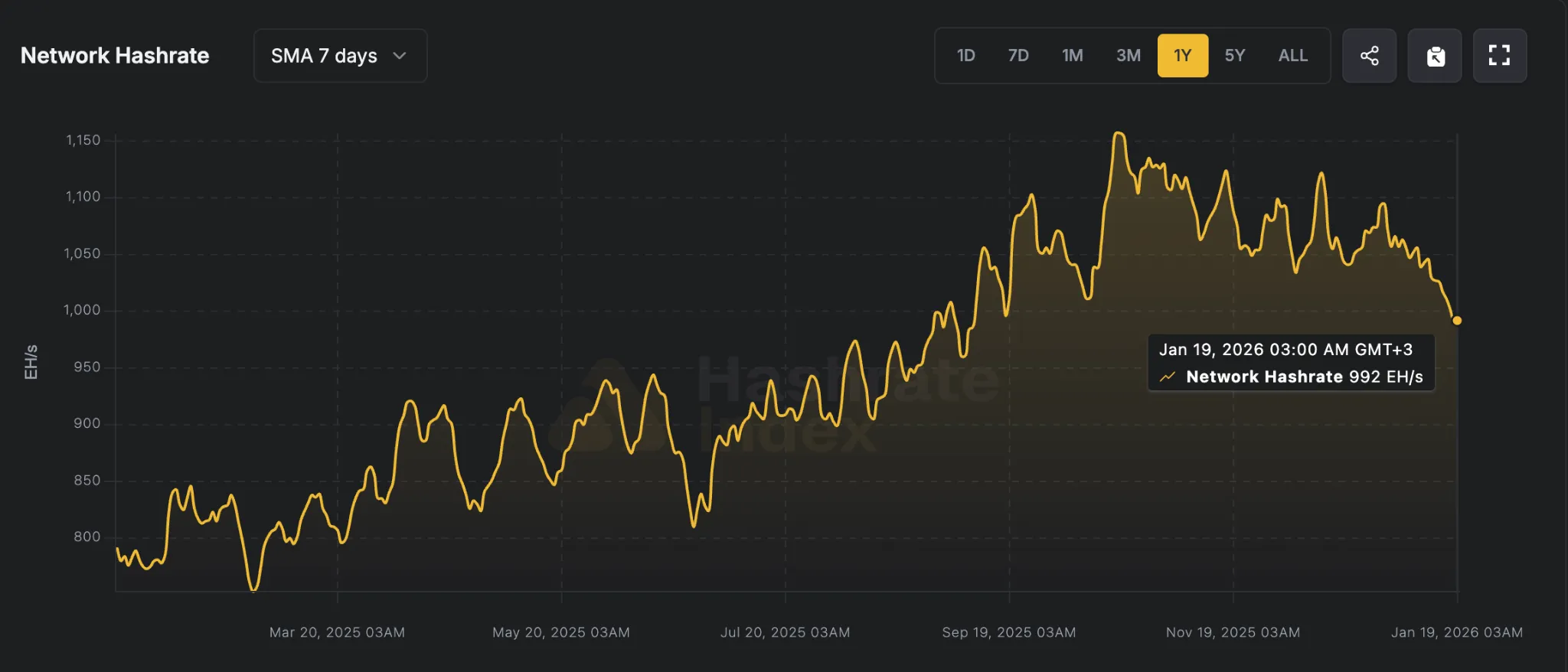
At its peak in mid-October, the metric stood at 1,157 EH/s. Since then, it has dropped by about 15%. At the same time, Bitcoin mining difficulty continues to decrease, making mining easier by reducing the amount of computational work required to find a block.
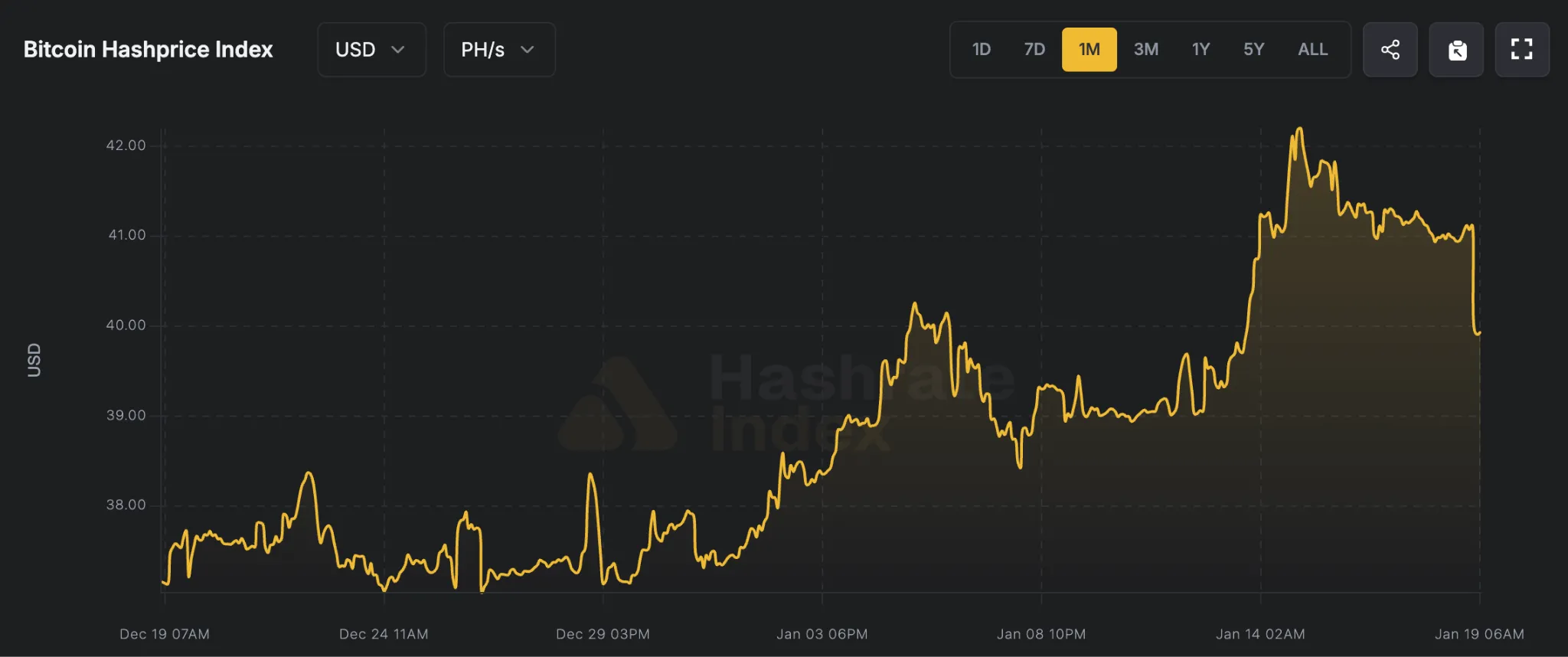
Over the past month, hashprice has also risen from $37.15 to $40 per PH/s per day, signaling improved mining profitability.
Why is the hashrate falling?
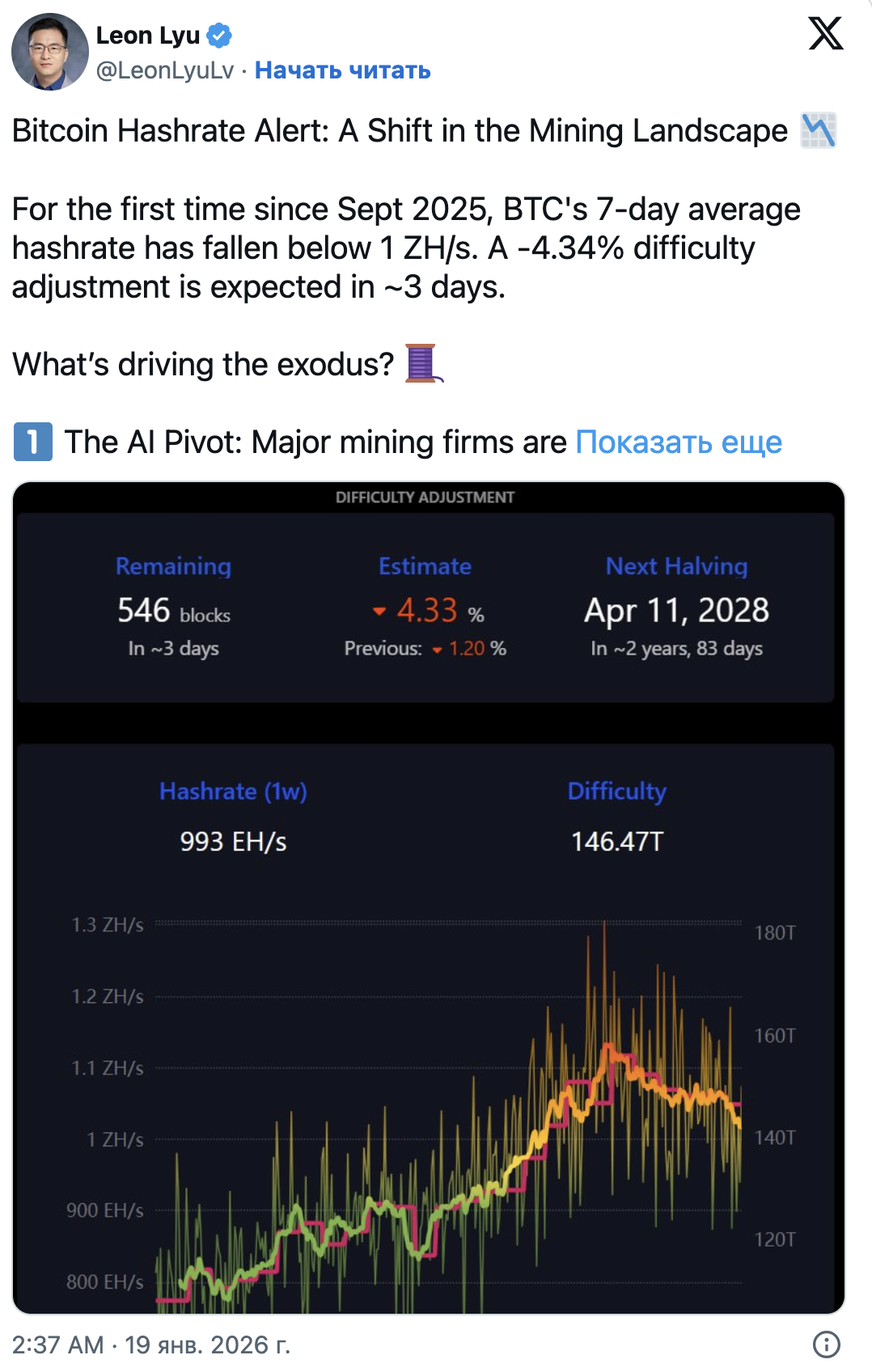
Leon Liu, founder of StandardHash, explained the outflow of computing power as a result of fundamental shifts in the industry. Miners are increasingly redirecting energy resources toward artificial intelligence workloads in search of higher margins.
Earlier, analysts at TheMinerMag described the situation as the most severe crisis the Bitcoin mining sector has faced. Due to falling revenues and rising debt, even companies with efficient hardware fleets and low electricity costs are operating near break-even.
In this environment, mining infrastructure—access to high-capacity power grids and industrial cooling—has become an optimal foundation for high-performance computing (HPC). Operators are moving away from the SHA-256 algorithm and instead leasing capacity to AI companies.
Liu also suggested that some manufacturers, such as Bitmain, may be deploying excess equipment through opaque or indirect schemes. As a result, publicly disclosed hashrate data could understate actual computing capacity.
“While manufacturers are bringing their excess capacity online, the net outflow of hashrate confirms the enormous pressure on miners’ profitability. AI is not just a trend—it is actively competing for power grids,” the expert concluded.
Previously, Justin Bons, founder of the European firm Cyber Capital, predicted that Bitcoin could collapse within the next 7–11 years.
According to him, the problems would begin with a mining downturn: the network’s security budget would shrink, leading to attacks such as double spending and blockchain reorganizations.
Overall, the drop in Bitcoin’s hashrate highlights a structural shift in the mining industry rather than a short-term anomaly. Growing competition from AI for energy and infrastructure is reshaping miners’ incentives, forcing the network to adapt to a new balance between security, profitability, and alternative high-performance computing use cases.
 ES
ES  EN
EN