
In May 2025, OpenAI announced the acquisition of a startup founded by former Apple chief design officer Jony Ive, focused on developing AI-powered devices. Around the same time, Sam Altman presented employees with an early preview of the gadget he is developing together with Ive and shared plans to release up to 100 million “AI companions.” Altman believes these devices could become part of everyday life.

The new product is designed to fully understand a user’s surroundings and daily context. It is intended to be unobtrusive, able to sit in a pocket or on a desk, and to become a “third core device,” alongside a MacBook Pro and an iPhone.

It will not be a phone, glasses, or a wearable. Ive and Altman aim to move people away from screens altogether, describing the concept as part of a “new design movement.”
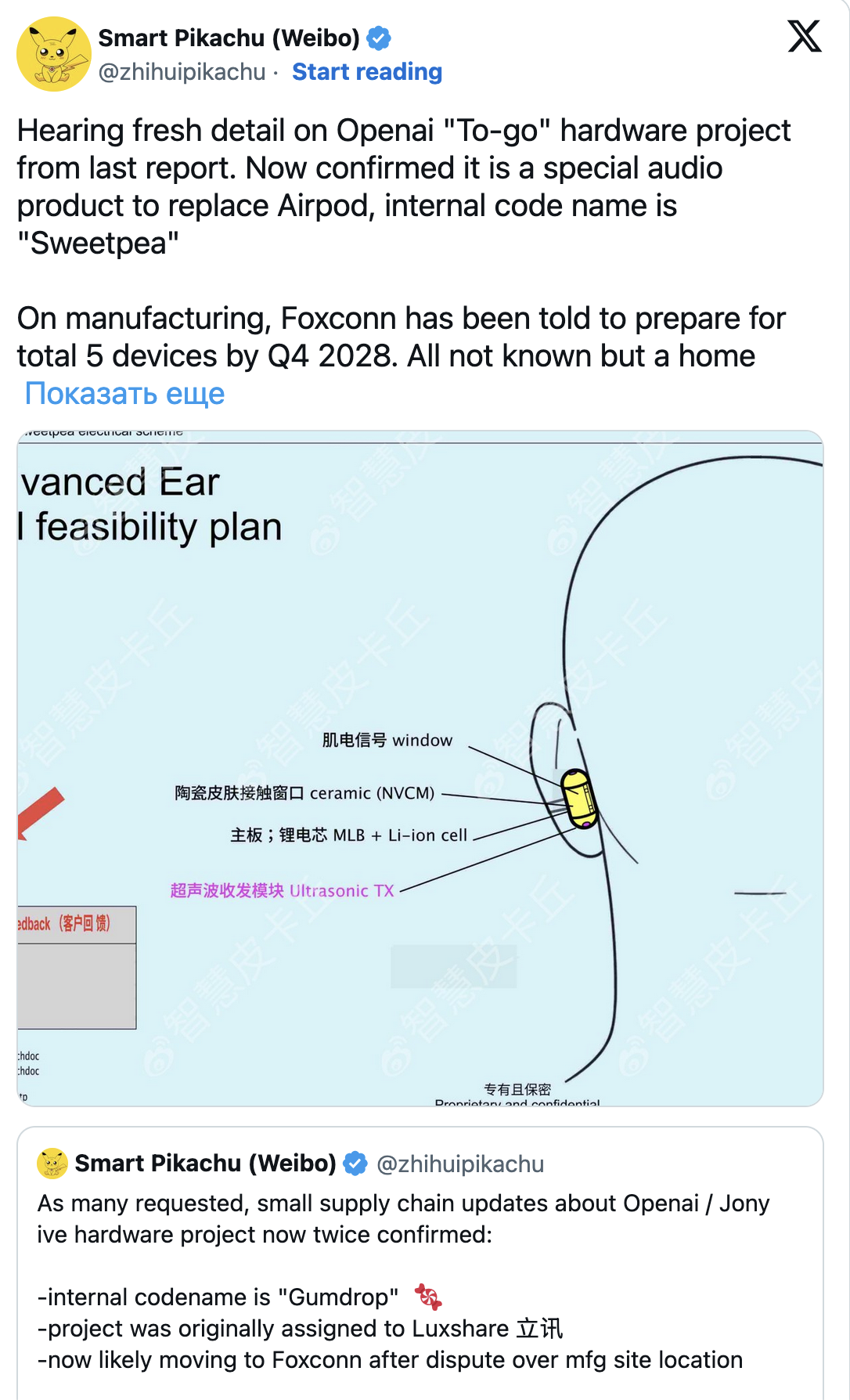
In January, an insider nicknamed Smart Pikachu revealed that OpenAI was planning to release an AirPods replacement.
In January, an insider nicknamed Smart Pikachu revealed that OpenAI was planning to release an AirPods replacement. X

OpenAI’s CEO has emphasized that this will not be a single product, but an entire “line of devices,” comparing the vision to Apple’s broader ecosystem approach.

Lehane called the device one of OpenAI’s flagship launches for 2026, though it remains unclear whether it will actually go on sale that year.

In January, an insider known as Smart Pikachu claimed that OpenAI is preparing a potential “AirPods replacement.” The internal codename is reportedly Sweetpea. The device would feature an egg-shaped case with two “capsules” worn behind the ears. It is said to run on a smartphone-class processor, with high component and manufacturing costs, but correspondingly strong performance.

According to the blogger, a presentation is planned for September 2026, with projected first-year sales of 40–50 million units. Smart Pikachu also added that Foxconn is expected to prepare “five devices for mass production” by the fourth quarter of 2028.

In October 2025, the Financial Times reported that OpenAI was working on a screenless, palm-sized device that “receives audio and visual signals and responds to user queries.” This could potentially be a smart speaker–like product.

Other plans for 2026

OpenAI CFO Sarah Friar outlined the company’s 2026 roadmap in a blog post, describing the year as a phase of “practical deployment.”

“The top priority is closing the gap between what AI can do today and how people, businesses, and countries actually use it in everyday life,” she wrote.

Friar noted that many capabilities are already available, particularly in healthcare, science, and entrepreneurship. She also described OpenAI’s approach to monetization alongside the need to scale computing infrastructure, stressing that the company’s revenue growth is directly tied to available compute capacity.
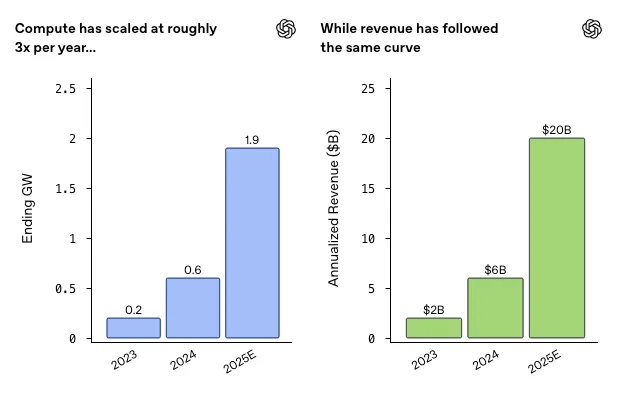
Source: OpenAI.
Source: OpenAI. 

OpenAI’s computing power expanded from 0.2 GW in 2023 to 1.9 GW in 2025. Over the same period, annual revenue grew from $2 billion to more than $20 billion.

“This is unprecedented growth. We strongly believe that greater compute availability would have driven even faster adoption and monetization,” Friar said.

The technology sector, and OpenAI in particular, remains under close scrutiny due to massive investments in data centers and energy infrastructure. Critics argue that a bubble may be forming, as OpenAI remains unprofitable despite its rapidly rising revenue.

“Securing compute capacity requires commitments made years in advance, and growth does not follow a perfectly smooth curve,” Friar added, emphasizing that OpenAI’s business model must scale alongside its products.

Advertising and scaling

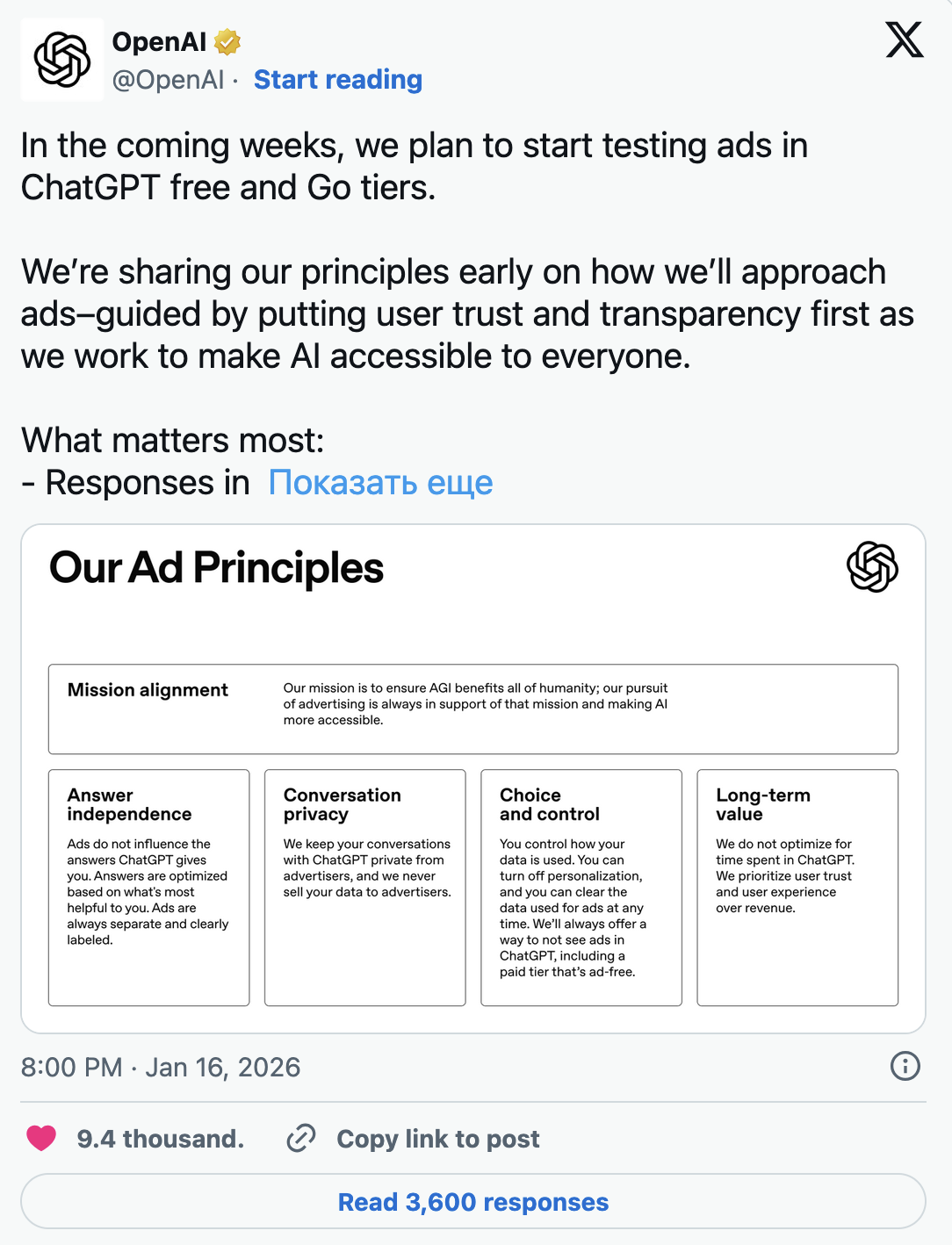
On January 16, OpenAI announced that it will begin testing advertising in the free ChatGPT tier and the low-cost Go plan in the coming weeks.
Snapchat добавит новые ИИ-инструменты для AR #OpenAI#Искусственный Интеллект#чат-боты OpenAI представит ИИ-устройство и запустит рекламу в ChatGPT 20.01.2026 Владимир Слипер  Компания OpenAI «идет по плану» и представит свое первое устройство во второй половине 2026 года. Об этом заявил директор по глобальным вопросам Крис Лехане в разговоре с Axios.  В мае 2025 года OpenAI объявила о покупке стартапа экс-главы по дизайну в Apple Джони Айва, который занимается созданием ИИ-девайсов. В то же время Сэм Альтман представил сотрудникам предварительный обзор гаджета, которые он разрабатывает совместно с Айвом, и поделился планами выпустить 100 млн «ИИ-компаньонов». Они станут частью повседневной жизни людей, надеется предприниматель.  Новый продукт способен полностью осознавать окружающую обстановку и жизнь пользователя. Он ненавязчив, может лежать в кармане или на столе и «станет третьим основным устройством после MacBook Pro и iPhone».  Это не будет телефон, очки или что-то, что можно носить на теле — Айв и Альтман хотят отучить людей от экранов. Речь идет о «новом дизайнерском движении».  CEO OpenAI подчеркнул, что планируется целая «линейка устройств», сравнив концепцию с экосистемой Apple.  Лехане назвал устройство одной из главных новинок компании в 2026 году. Неизвестно, поступит ли оно в продажу в этом году.  В январе инсайдер с ником Smart Pikachu рассказал, что OpenAI собирается выпустить «замену» AirPods.  Внутреннее кодовое название — Sweetpea. Кейс будет в форме яйца с двумя «капсулами», которые нужно помещать за ухо. Основной процессор — чип для смартфонов. Стоимость материалов и компонентов будет высокой, но и сам гаджет станет мощным.  По словам блогера, презентация запланирована на сентябрь 2026 года. Прогнозируемый объем продаж в первый год — 40-50 млн единиц.  Foxconn должна «подготовить к выпуску пять устройств» к четвертому кварталу 2028 года, добавил Smart Pikachu.  В октябре 2025 года издание FT сообщило о работе OpenAI над устройством без экрана размером с ладонь, которое «принимает звуковые и визуальные сигналы и отвечает на пользовательские запросы». Возможно, речь идет об «умной» колонке. Другие планы на 2026 год  Финансовый директор OpenAI Сара Фрайар поделилась в блоге планами на 2026 год — он станет периодом «практического внедрения».      «Приоритетной задачей является устранение разрыва между тем, что сейчас возможно с помощью искусственного интеллекта, и тем, как люди, компании и страны используют его в повседневной жизни», — сообщила она.  Возможности огромны и доступны уже сейчас, особенно в области здравоохранения, науки и предпринимательства, добавила Фрайар.  Топ-менеджер изложила видение того, как OpenAI рассматривает стратегию по монетизации услуг при одновременном обеспечении вычислительных мощностей. По ее словам, доходы лаборатории напрямую зависят от доступности технической инфраструктуры. image Источник: OpenAI.  Вычислительные мощности ИИ-стартапа выросли с 0,2 ГВт в 2023 году до 1,9 ГВт в 2025. Годовой доход за аналогичный период увеличился с $2 млрд до более чем $20 млрд.      «Это беспрецедентный рост. И мы твердо убеждены, что большее количество вычислительных мощностей привело бы к более стремительному внедрению и монетизации», — подчеркнула Фрайар  Технологическая индустрия и OpenAI находятся под пристальным вниманием из-за огромных инвестиций, которые направляются в дата-центры и обеспечение их энергией. Скептики считают, что надувается пузырь, поскольку, несмотря на высокую выручку, стартап Альтмана остается убыточным.      «Обеспечение вычислительных мощностей требует обязательств, принятых за годы до этого, а рост не происходит по идеально ровной линии», — добавила Фрайар.  She said OpenAI's business model must scale with its products. Speaking of scaling  On January 16, OpenAI announced that it would begin testing ads in the free ChatGPT and low-cost Go plans in the coming weeks .
In the coming weeks, we plan to start testing ads in ChatGPT free and Go tiers. X

The company stated that:

  • responses will not be influenced by commercial content;

  • ads will always be clearly labeled and displayed separately;

  • user conversations will not be accessible to advertisers.

There will be no advertising in the Plus, Pro, Business, or Enterprise plans. Altman added that he will try to ensure that sponsored messages, where present, are genuinely useful.