
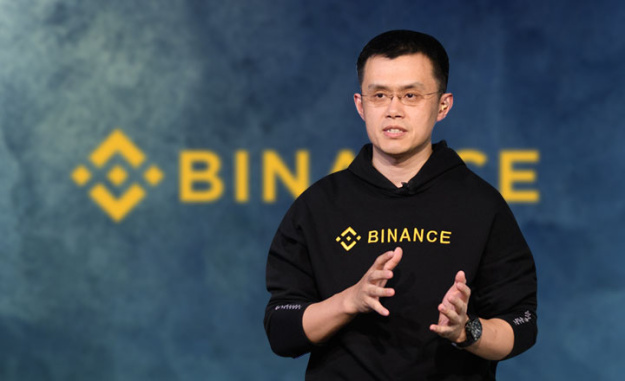
“They will pay for hotels, book restaurants, and execute millions of transactions — far more than humans,” he said.
CZ did not name any specific crypto project capable of supporting such infrastructure, citing the potential impact on token prices.
According to him, traditional banks are not suitable for digital assistants due to AML/KYC requirements and the lack of infrastructure capable of handling the necessary transaction throughput.
AI agents could also trade cryptocurrencies and other assets on behalf of users.
Privacy and Bitcoin’s Limitations
Speaking about the broader digital asset industry, Zhao noted that he was once a Bitcoin maximalist, but no longer considers himself one. He argued that “digital gold” lacks sufficient fungibility and privacy.
“Privacy plays a fundamental role in our society. But right now, Bitcoin and most cryptocurrencies don’t provide it adequately. BTC was designed to be pseudonymous — every transaction on the blockchain can be traced, especially now with centralized exchanges and KYC,” CZ said.
He illustrated the importance of privacy with a simple example: if someone books a hotel and their address becomes publicly known, it creates a security risk.
From China to Canada
Zhao also shared details about his personal journey. His father moved from China to Canada in 1984 to pursue academic studies, several years before the Tiananmen Square protests. CZ and his mother received visas a few years later.
At 14, Zhao worked at McDonald’s in Vancouver while studying, taking on part-time jobs during the school year and summers to pay tuition. He graduated with $32,000 in student debt, which his manager Mike Fisher later helped him repay.
“Canada is amazing because you can get an education without being crushed by unmanageable debt. In the US, that’s often not the case,” he said.
Zhao does not consider himself a programming prodigy, describing himself as a “normal developer.” By his late twenties, he shifted focus from coding to business development and sales.
Early Career and Entry Into Crypto
After university, Zhao interned in Tokyo, developing order-matching software — similar to the systems later used by Binance. In November 2001, he moved to New York to work at Bloomberg, where he spent four years before launching an IT startup in Shanghai in 2005.
In 2012, CZ turned his attention to Bitcoin. A year later, he was advised to invest 10% of his capital in BTC. After six months of studying the technology, he became fully convinced.
“I’m convinced. I’m ready,” he recalled telling himself.
He sold his Shanghai apartment for approximately $900,000 and invested in Bitcoin. Shortly afterward, he joined Blockchain.info as its third team member after connecting with Roger Ver. He later worked briefly at OKCoin before co-founding an exchange engine project in Tokyo.
The Birth of Binance
In March 2017, regulatory actions in China shut down many of Zhao’s clients. By May, his team decided to build their own exchange using an already developed trading engine. Binance was born.
The platform launched an ICO for BNB tokens, attracting around 20,000 participants, 80–90% of whom were from China. After China banned crypto exchanges and ICOs in September 2017, the team relocated to Tokyo.
BNB was initially sold at $0.10, dropped to $0.06, and later began a rapid ascent.
As Binance expanded, the company launched Binance US. CZ also invested in FTX, at one point holding roughly a 20% stake before exiting at a reported $32 billion valuation.
Life After Binance
Following his release, CZ has focused on advising governments on crypto regulatory frameworks and investing in blockchain, AI, and biotech startups. He is also developing an educational initiative, Giggle Academy.
He stated he does not plan to launch a token for the academy, as it would likely attract speculation, although he acknowledged potential benefits in incentivizing learning.
Regarding his departure from Binance, Zhao said he is satisfied with the decision, as it freed him from operational responsibilities and gave him more time for family and personal pursuits.
CZ outlines a future in which AI agents operate as autonomous economic actors, conducting transactions at a scale far beyond human capacity. His vision highlights both the transformative potential of crypto-powered automation and the growing importance of privacy in digital finance. If realized, such an ecosystem could fundamentally reshape how value is exchanged in the age of artificial intelligence.
 ES
ES  EN
EN