

According to the publication, in some cases AI really is changing the structure of work, while in others it has become a convenient explanation for restructuring, cost reduction, and correcting the consequences of overhiring during the pandemic.
Tracker data
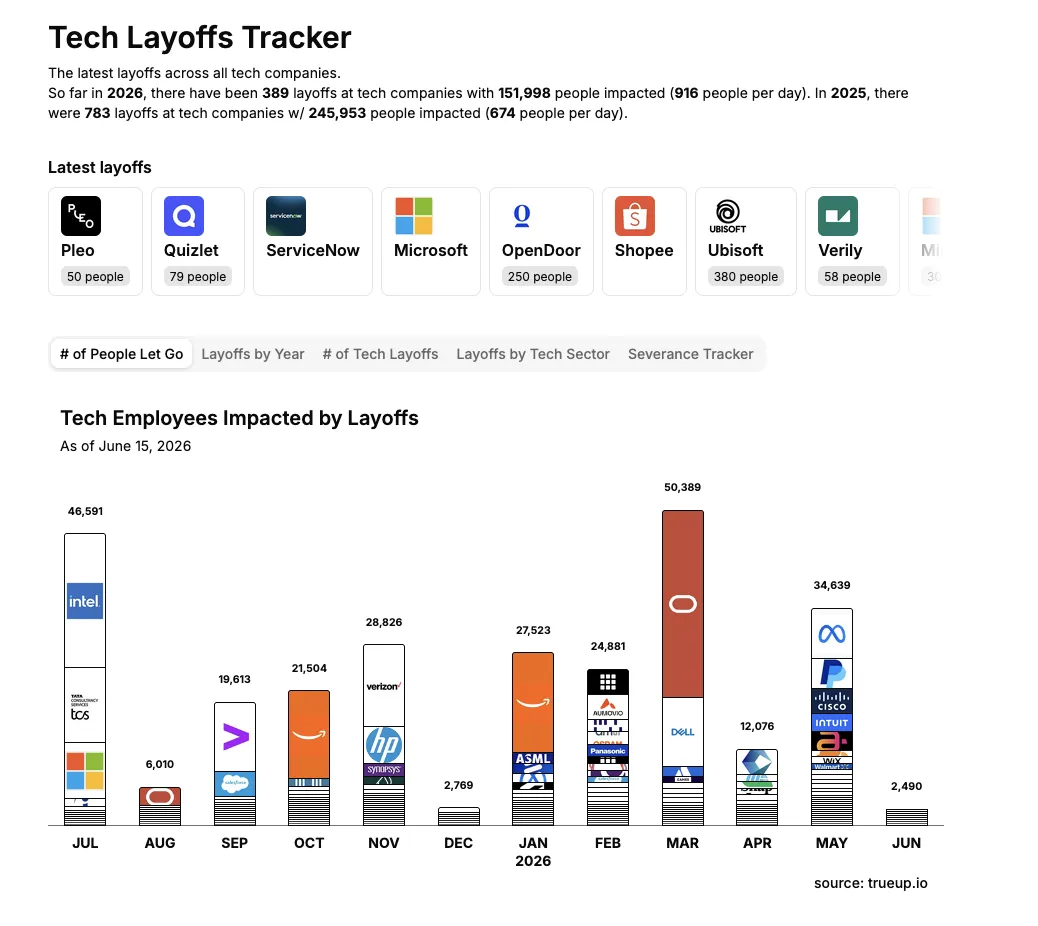
At the time of publication, TechCrunch, citing TrueUp, reported 363 rounds of layoffs in the technology sector since the beginning of 2026. They affected almost 150,000 people, with an average pace of 974 employees per day.
As of June 15, the TrueUp tracker already showed 389 layoff events and 151,998 employees who had lost their jobs. The average pace was 916 people per day.
The authors of TechCrunch also cited data from consulting firm Challenger, Gray & Christmas: in May, U.S. employers announced 97,006 job cuts, with the technology sector accounting for 38,242 layoffs — the highest number since August 2024.
Artificial intelligence became the most frequently cited reason for job cuts for the third month in a row. Since the beginning of 2026, employers have linked AI to 87,714 layoffs, or 22% of all announced job cuts.
Which companies cut staff
Among the examples named by TechCrunch were Block, Cloudflare, Meta Platforms, and GitLab.
In February, Block cut more than 4,000 employees, reducing its workforce from more than 10,000 to fewer than 6,000 people. Fintech company CEO Jack Dorsey said AI tools are changing the principles of building and managing an organization. However, he later admitted that Block had hired too many people during the pandemic.
In May, network and cloud infrastructure provider Cloudflare announced the dismissal of more than 1,100 employees. The company said that internal use of artificial intelligence had grown by more than 600% in three months, while the team launches thousands of AI agent sessions every day.
According to Reuters, on May 20, Meta Platforms planned to begin the first wave of layoffs affecting about 10% of its workforce, or around 8,000 people. The agency’s sources linked the decision to the company’s restructuring around AI and efficiency improvements. Meta declined to comment on the timing and scale of the layoffs.
Software development platform GitLab reported a reduction of around 14% of its workforce, or 350 employees. The company also decided to leave 22 countries in order to reduce the geographic footprint of its team by about 37%. In the same report, GitLab pointed to the development of the GitLab Duo Agent Platform and integrations with Claude models from Anthropic, Amazon Bedrock, and Google Cloud Vertex AI.
Other known cases of layoffs include:
- according to media reports, in April, Oracle began laying off thousands of employees amid a decline in its stock price and major capital expenditures on AI infrastructure development;
- Snap planned to cut around 1,000 full-time employees, or about 16% of its global workforce.
A “silver bullet” for layoffs
Venture investor Marc Andreessen, in a conversation with podcaster Harry Stebbings, said that large companies often remain bloated after periods of aggressive hiring. He called AI a “silver bullet” for justifying layoffs and added that most of these cuts are not related to automation but to management mistakes and excessive staffing.
TechCrunch noted that this narrative increases social tension. On the one hand, companies are laying off tens of thousands of employees and referring to AI, which may deepen distrust toward the industry. On the other hand, the growth of the artificial intelligence market is creating major fortunes for founders, investors, and early employees of AI companies.
Conclusion:
AI is becoming both a real driver of workplace restructuring and a convenient explanation for cost cuts after years of aggressive hiring. As tech companies continue to reduce staff while investing heavily in artificial intelligence, social tension around AI-driven job displacement is likely to grow.
 ES
ES  EN
EN