

The key difference between the two lies in how their safety classifiers work. The public model monitors sensitive requests related to cybersecurity, biology, chemistry, and attempts to distill the model. In such cases, the request is redirected to Claude Opus 4.8.
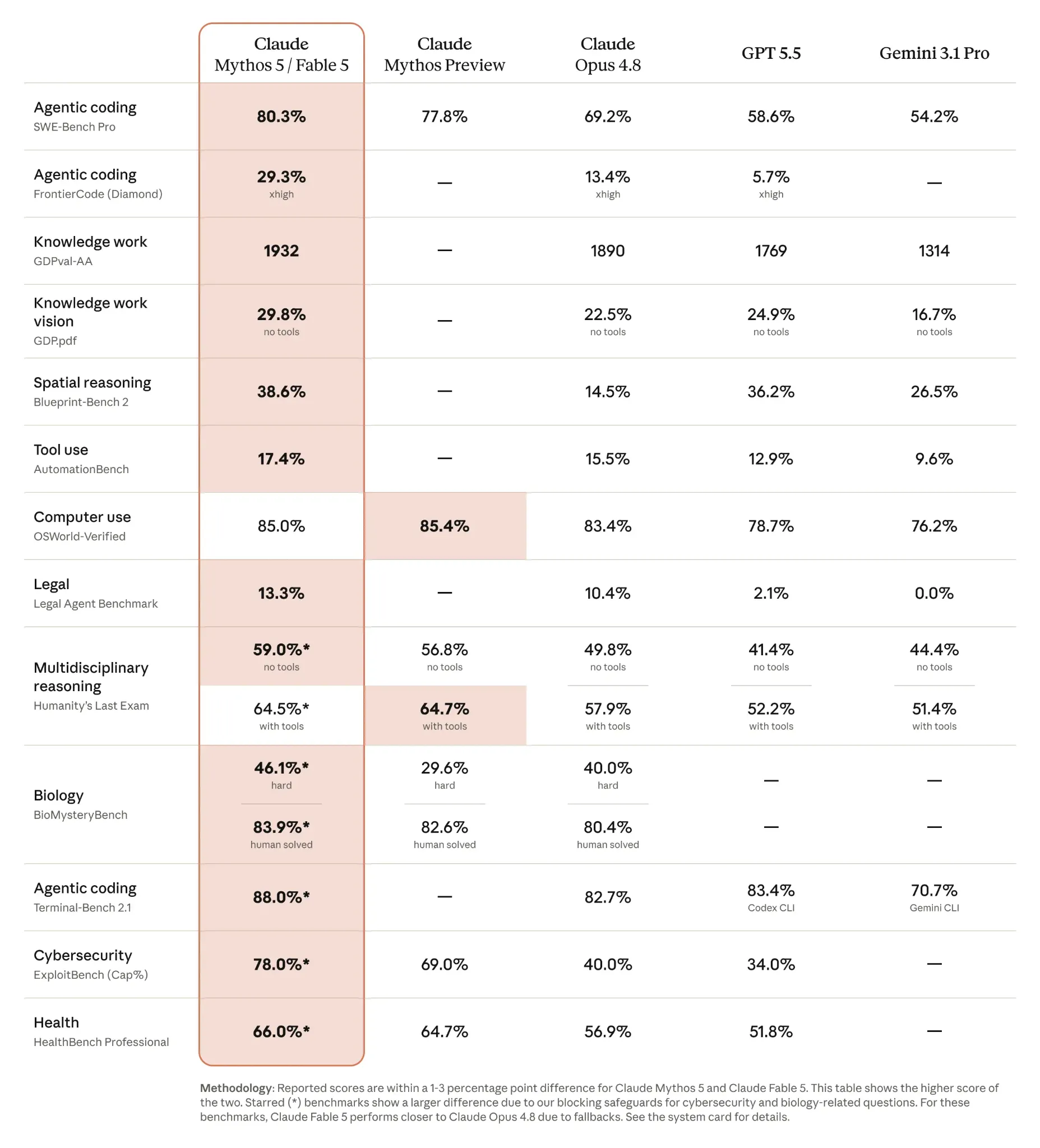
“To release the model safely and quickly, we configured these safeguards conservatively — they may sometimes respond to harmless requests, although on average they are triggered in fewer than 5% of sessions,” the company emphasized.
Fable 5 is available through the standard subscription in the web interface and via the Claude API.
Both models have the same price: $10 per 1 million input tokens and $50 per 1 million output tokens. The company noted that this is less than half the cost of Claude Mythos Preview.
Regulators around the world have expressed concern over the capabilities of Anthropic’s new AI model.
More details about the closed flagship model
At launch, Claude Mythos 5 was made available to selected trusted participants, including members of Project Glasswing. As part of the program, the new model replaced Claude Mythos Preview.
Anthropic plans to expand access for cybersecurity tasks and selected biomedical scenarios by the end of 2026.
Like Fable, Mythos has restrictions, but it offers expanded access in certain areas.
Anthropic described the closed model as its strongest solution for cybersecurity tasks, saying it “excels at detecting and exploiting software vulnerabilities.” Its biology results also show an acceleration of certain drug development stages by roughly 10 times.
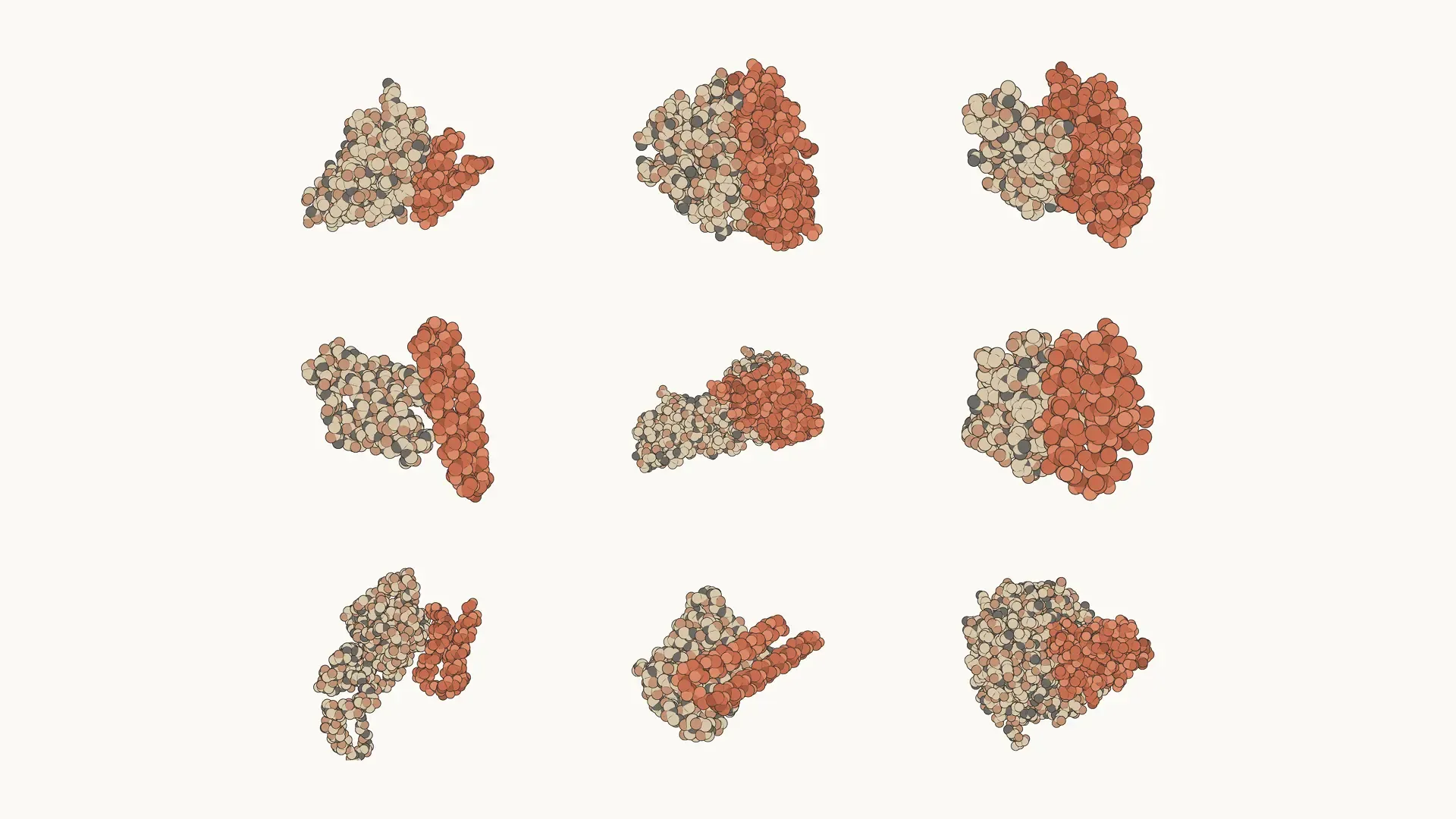
“Mythos 5 uses protein design and bioinformatics tools, but without human participation, it matches and often surpasses experienced human operators. […] Nine out of 14 protein targets in the study produced promising drug development compounds that we are currently investigating,” the company emphasized.
For biomedical researchers, Anthropic is preparing a separate access pathway to a version of Fable 5 without biology and chemistry restrictions, while keeping cybersecurity-related limitations in place.
The first publicly available Mythos-class model
Anthropic calls Fable 5 the strongest Claude model ever released for general access. The main focus is on long and complex tasks. The company highlights areas such as programming, document analysis, vision, memory, and scientific research.
The startup has not disclosed the engineering details of the model’s architecture. Information about the number of parameters, training approach, and technical stack is also not yet available. No open license has been published either.
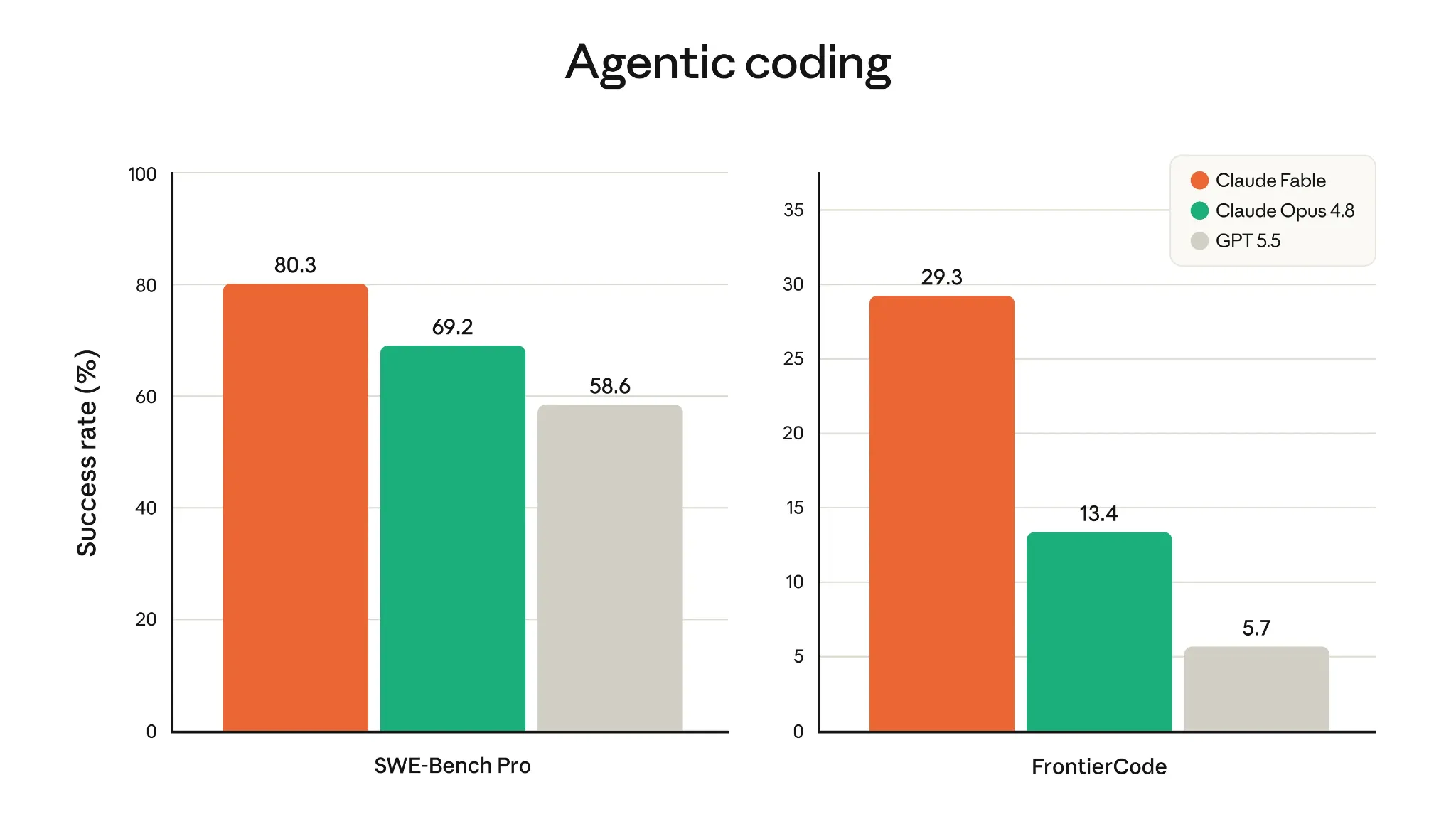
During preliminary testing, Stripe said that Fable 5 compressed months of development into several days. The model migrated a 50-million-line Ruby codebase in just one day. Analysts noted that such a task would have taken a team of programmers two months.
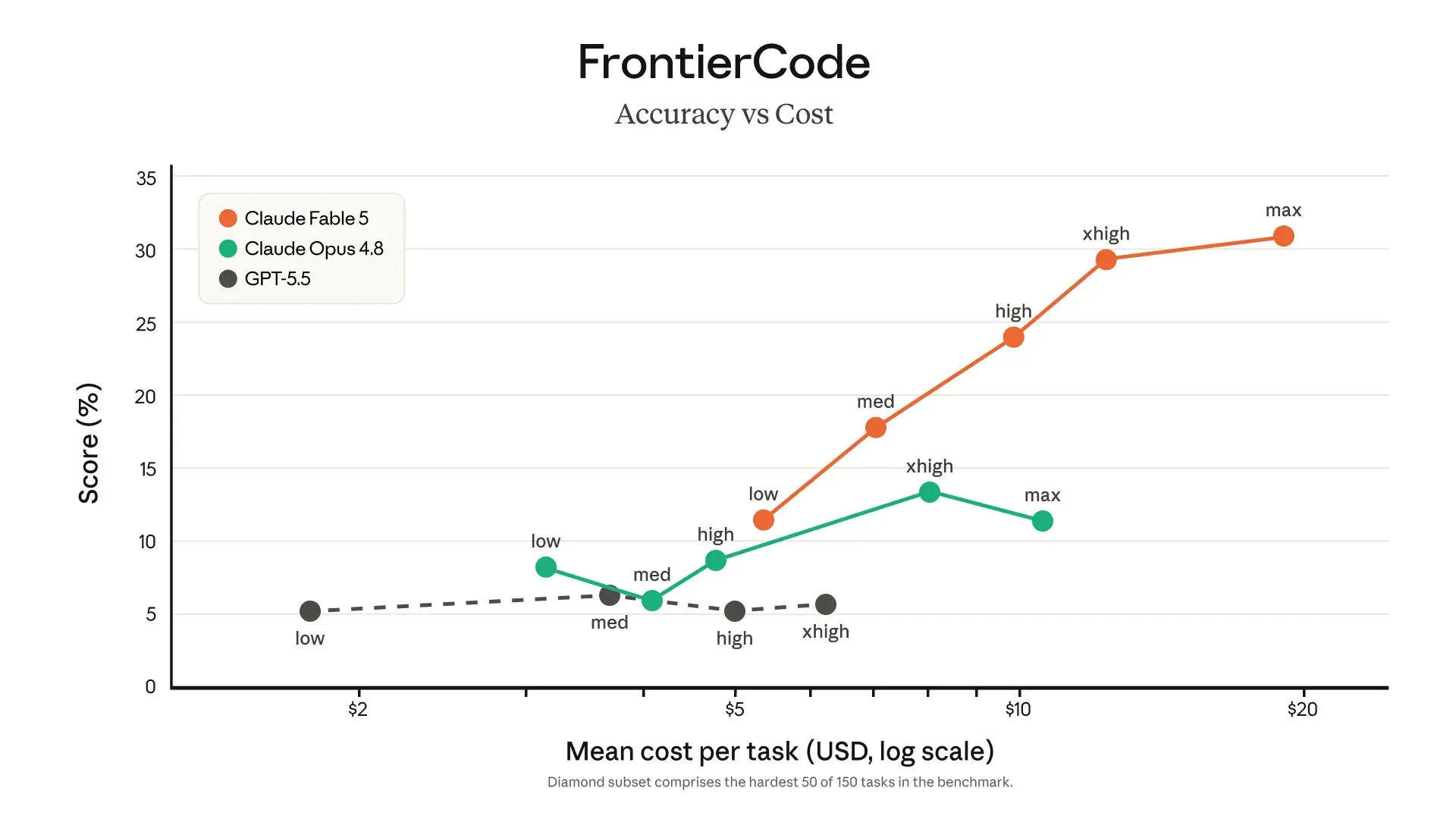
Fable 5 is also more efficient in terms of token costs than previous Claude versions: in Cognition’s FrontierCode evaluation, the model shows the best results among leading AI systems.
In the Hebbia Finance Benchmark, which evaluates logical reasoning in financial analysis, Fable 5 achieved the highest score among all models.
One of the model’s key features is “vision.” The AI can extract precise numbers from detailed scientific charts and perform complex tasks, such as reconstructing the source code of a web application from screenshots alone.
In addition, Fable 5 requires fewer supporting tools. For example, previous Claude models struggled to play Pokémon FireRed even with additional tools, while the new version completed it with minimal assistance.
Fable 5 also has improved memory, maintaining focus across millions of tokens in long-running tasks and improving results by using its own notes.
Conclusion:
Claude Fable 5 marks Anthropic’s strongest public model release, with major improvements in coding, vision, memory, and complex reasoning. At the same time, the restricted Mythos 5 model highlights growing concerns around advanced AI capabilities in cybersecurity and biomedical research.
 ES
ES  EN
EN