

Best Overall

- Best-in-class reasoning and writing
- Strong ecosystem and integrations
- Advanced multimodal capabilities

OpenAI has launched GPT-6 Astra, its most capable artificial intelligence model to date. The model can operate computers, complete multistep workflows and handle tasks that would otherwise require continuous human input.
 By Daniel Mercer
 OpenAI has integrated the GPT-5.3 Instant model into ChatGPT, improving tone, contextual appropriateness, and the overall flow of dialogue. According to the developers, the update is designed to make everyday conversations with the chatbot more useful and natural.
 By Daniel Mercer
 To make the AI in Meta’s smart glasses better, data workers in Nairobi are reviewing private recordings. These reportedly include nudity, sex videos, and banking details.

 By Alex Rowland
 Meta is testing a shopping research feature within its AI chatbot, Meta AI, aimed at competing with similar tools offered by OpenAI’s ChatGPT and Google’s Gemini, Bloomberg reports
 By Daniel Mercer
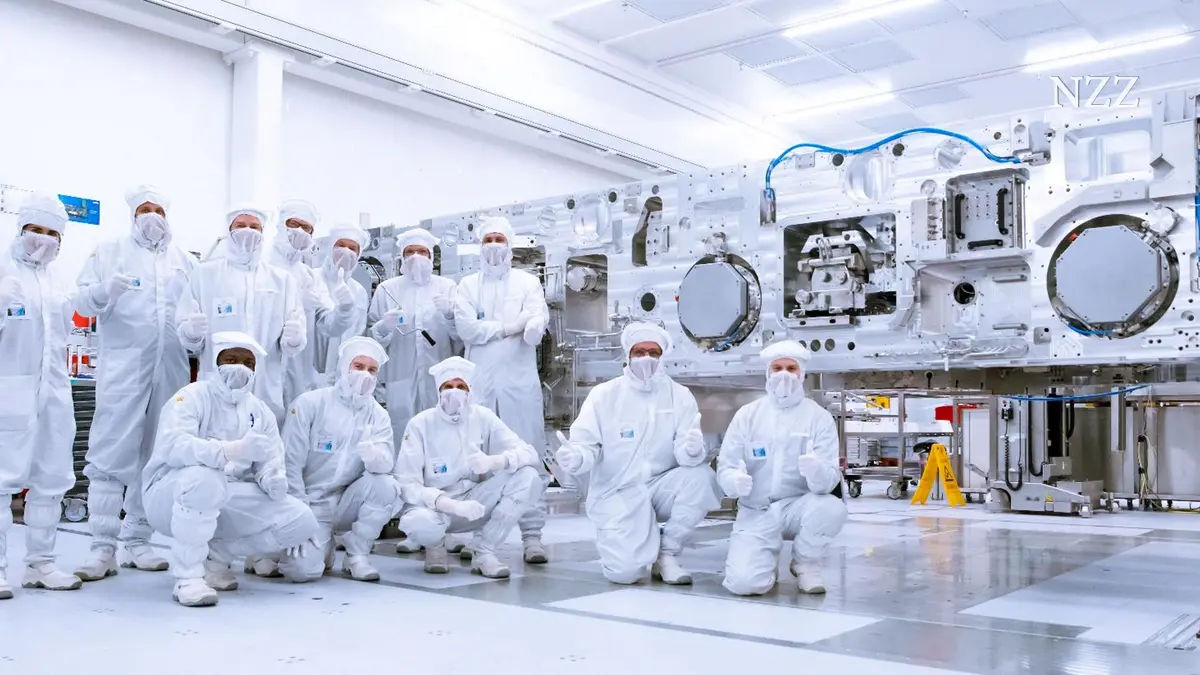
 ASML, the world’s only manufacturer of EUV lithography machines used to produce the most advanced chips, is looking to expand beyond its traditional core business. Reuters reports exclusively, citing ASML Chief Technology Officer Marco Pieters, that the Dutch company is preparing to move into new segments of the semiconductor value chain.
 By Chris Borden
 After OpenAI stepped in to take over Anthropic’s Pentagon deal, the ChatGPT maker has faced sharp internal and external criticism.
 By Alex Rowland
 Cybersecurity firm OpenZeppelin has audited OpenAI’s new AI benchmark, EVMbench, and identified methodological flaws as well as data contamination issues.
 By Alex Rowland
 Researchers at Georgetown University have analyzed thousands of procurement requests issued by China’s People’s Liberation Army (PLA). The documents reveal how broadly Beijing is already testing artificial intelligence for military use—from drone swarms and deepfake tools to autonomous decision-making systems.
 By Alex Rowland
 Artificial Analysis has released version 2.0 of its AA-WER speech-to-text benchmark, which measures the accuracy of speech recognition models. In the overall ranking, ElevenLabs’ Scribe v2 takes first place with a word error rate of just 2.3%.
 By Chris Borden
 AI search engine Perplexity has introduced two new text-embedding models that aim to match or outperform Google’s and Alibaba’s offerings while using only a fraction of the usual memory footprint. Both models are open source.


 ES
ES  EN
EN