



Best Overall

- Best-in-class reasoning and writing
- Strong ecosystem and integrations
- Advanced multimodal capabilities

OpenAI has launched GPT-6 Astra, its most capable artificial intelligence model to date. The model can operate computers, complete multistep workflows and handle tasks that would otherwise require continuous human input.


 By Daniel Mercer
 Zhipu AI has released its new model, GLM-5.1, under an MIT license. The company says the model is designed for coding tasks that require hundreds of iterations, with the ability to continuously refine its own strategy.

 By Chris Borden
 Meta has unveiled Muse Spark, a new AI model developed by the company’s recently formed Meta Superintelligence Labs (MSL) research team. It is the first large language model released since CEO Mark Zuckerberg began a multibillion-dollar overhaul of Meta’s AI division in an effort to close the gap with rivals.
 By Alex Rowland
 Meta Superintelligence Labs has unveiled Muse Spark, the first model in its new Muse family and the company’s first AI system not released with open weights. According to early independent testing, the model significantly narrows Meta’s gap with OpenAI, Anthropic, and Google in the frontier AI race.
By Daniel Mercer Meta plans to release versions of its new AI models as open source, according to Axios. These models are the first to be developed under the leadership of Alexandr Wang, who joined Meta in 2025 as part of a nearly $15 billion deal involving Scale AI.
 By Daniel Mercer
 Microsoft’s Bing team - yes, really - has released the embedding model Harrier as open source. Harrier supports more than 100 languages, offers a context window of 32,000 tokens, and was trained on more than two billion training examples as well as synthetic data generated by GPT-5. According to the team, Harrier ranks No. 1 on the multilingual MTEB-v2 benchmark and, according to Microsoft, outperforms proprietary models from OpenAI and Amazon.
 By Daniel Mercer
 Google has introduced Gemma 4, a new family of open AI models designed for advanced reasoning and agent-based workflows.
 By Chris Borden
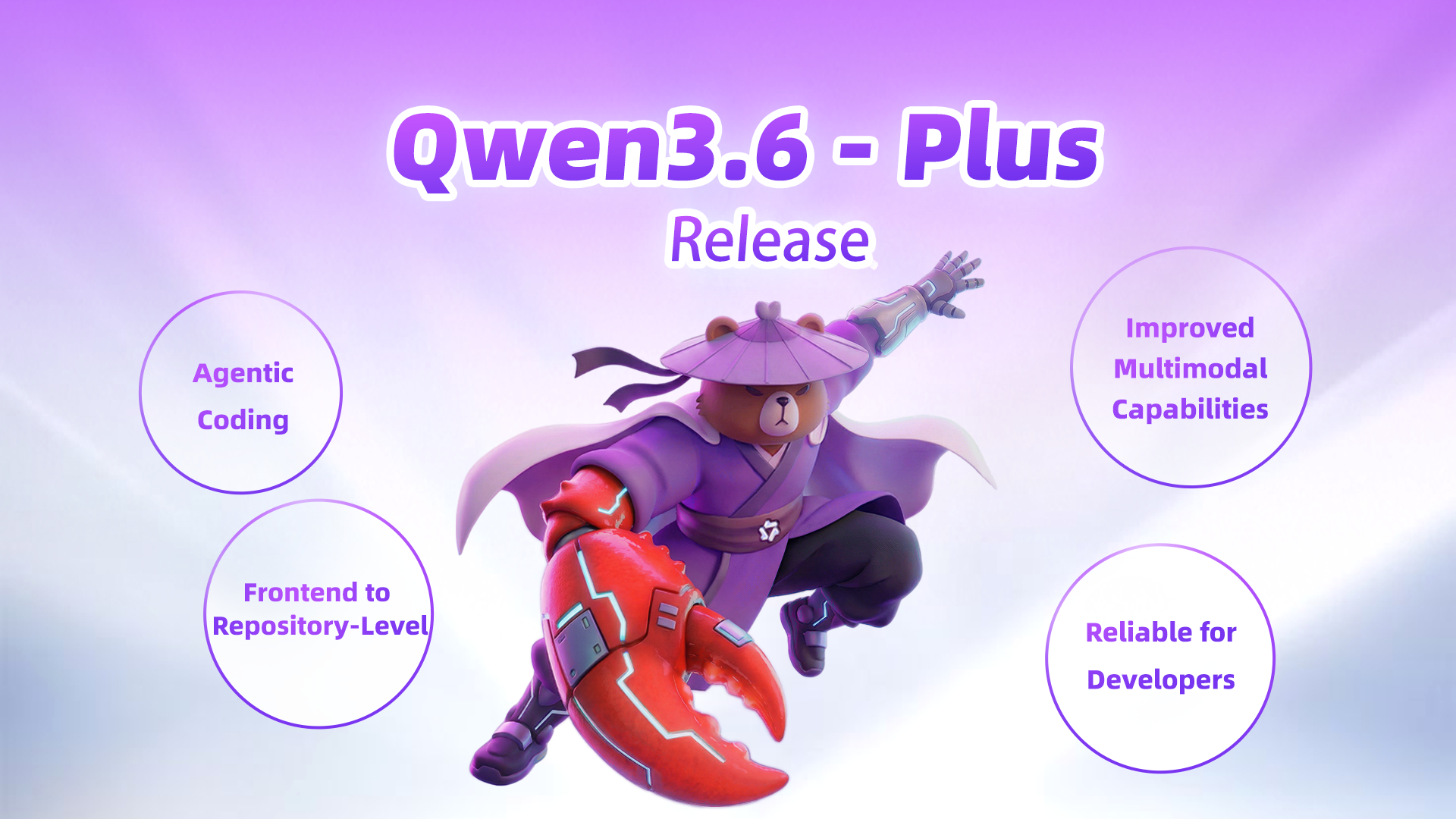
 Alibaba’s cloud division has launched Qwen3.6-Plus, a new model offering a 1 million-token context window by default, enhanced agent capabilities for programming, and more accurate multimodal perception and reasoning.
 By Alex Rowland
 Alibaba has unveiled Qwen3.5-Omni, an omnimodal AI model with text, image, audio, and video understanding. It is claimed to outperform Gemini 3.1 Pro on audio tasks and introduces a new capability: coding from spoken instructions and video input.
 By Daniel Mercer
 Google DeepMind has introduced Veo 3.1 Lite, its most affordable video generation model to date. The new model costs less than half the price of Veo 3.1 Fast while, according to Google, maintaining comparable generation speed. However, the company has not disclosed detailed qualitative differences between Veo 3.1, Fast, and Lite.


 ES
ES  EN
EN