


Best Overall

- Best-in-class reasoning and writing
- Strong ecosystem and integrations
- Advanced multimodal capabilities

OpenAI has launched GPT-6 Astra, its most capable artificial intelligence model to date. The model can operate computers, complete multistep workflows and handle tasks that would otherwise require continuous human input.

 By Chris Borden
 Apple is scaling back its plans for an AI-powered virtual health coach codenamed “Mulberry,” Bloomberg reports. Instead of launching it as a standalone product, the company plans to roll out some of the originally planned features individually within the Health app.
 By Chris Borden
 Anthropic’s safety training fails when Claude operates a graphical user interface
 By Daniel Mercer
 A new AI product launched by Anthropic triggered a massive sell-off across global markets, wiping out an estimated $285 billion in market capitalization on Tuesday, February 3. The sharp decline hit companies across the software, financial and legal information services, and asset management sectors, according to Bloomberg
 By Chris Borden
 Anthropic has introduced Claude Opus 4.6, a new flagship model. For the first time, it features a one-million-token context window, and is designed to locate relevant information in very large documents far more reliably than previous models.
 By Alex Rowland
 OpenAI has released its latest coding model, GPT-5.3-Codex. According to the company, it combines the coding capabilities of GPT-5.2-Codex with the reasoning and knowledge strengths of GPT-5.2, while being 25% faster than its predecessor.
 By Alex Rowland
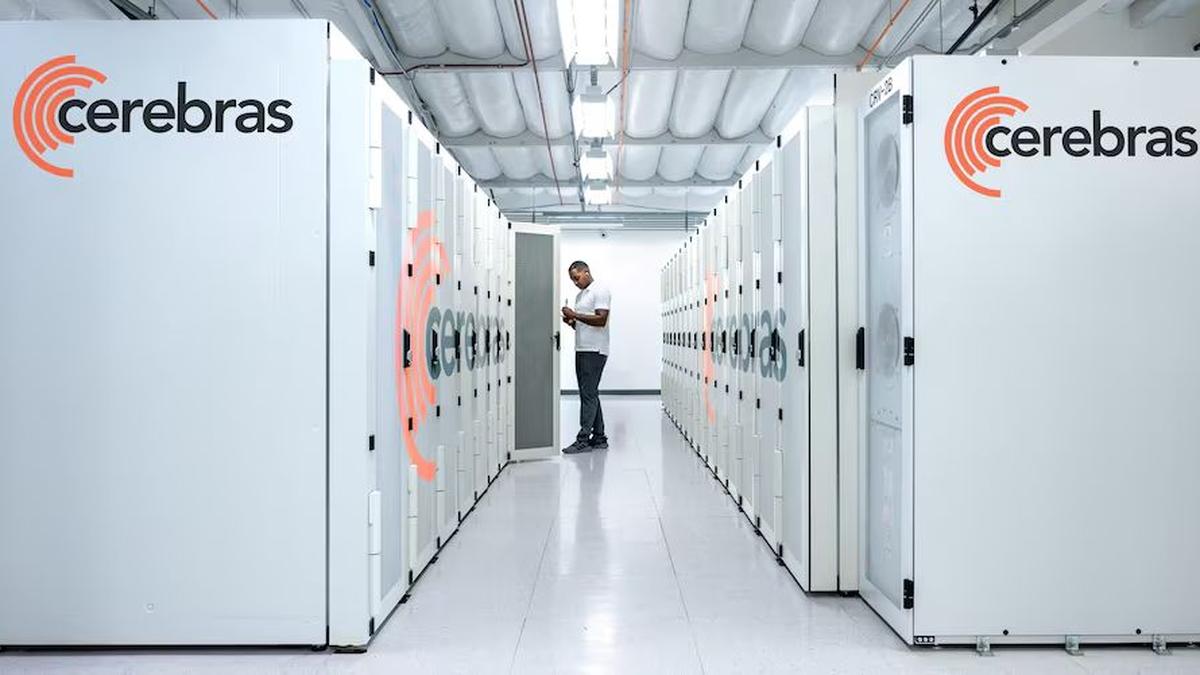
 Cerebras Systems, an AI chip startup, has closed a $1 billion funding round, valuing the company at approximately $23 billion, according to a press release. The round was led by Tiger Global, with participation from Benchmark, Fidelity, AMD, Coatue, and other investors.
 By Alex Rowland
 The popular open-source AI agent OpenClaw can be fully compromised through maliciously crafted documents, allowing attackers to install a persistent backdoor and take control of a user’s computer, security researchers have shown.
 By Daniel Mercer
 Mistral AI aims to undercut competitors on price in speech recognition with Voxtral Transcribe 2. The second generation of its speech-to-text models starts at $0.003 per minute and, according to Mistral, delivers higher accuracy than models such as GPT-4o mini Transcribe, Gemini 2.5 Flash, and Deepgram Nova. The model family includes two variants: Voxtral Mini Transcribe V2, designed for processing large audio files, and Voxtral Realtime, built for real-time applications with latency under 200 milliseconds. Voxtral Realtime, which costs twice as much, uses a dedicated streaming architecture that transcribes audio as it arrives, targeting use cases such as voice assistants, live captions, and call center analytics
 By Alex Rowland
 According to OpenAI CEO Sam Altman, ChatGPT has as many users in Texas as Claude has across the entire United States. Altman shared this statistic in response to Anthropic’s aggressive ad campaign, which pokes fun at ChatGPT by portraying it as ad-driven. Anthropic has publicly stated that it does not plan to introduce advertising into Claude.


 ES
ES  EN
EN