


Best Overall

- Best-in-class reasoning and writing
- Strong ecosystem and integrations
- Advanced multimodal capabilities

OpenAI has launched GPT-6 Astra, its most capable artificial intelligence model to date. The model can operate computers, complete multistep workflows and handle tasks that would otherwise require continuous human input.

 By Daniel Mercer
 Meta CEO Mark Zuckerberg has announced Incognito Chat, a new privacy-focused mode for Meta AI available on WhatsApp and the broader Meta AI platform. The feature is designed to give users a genuinely confidential space to interact with artificial intelligence — something Zuckerberg argues the industry has so far failed to deliver.

 By Chris Borden
 Google is introducing new AI features for Android under Gemini Intelligence, designed to automate multi-step tasks, summarize web content, fill out forms, and turn spoken thoughts into clear text messages. Ahead of Google I/O, the company announced that the features will launch this summer on the Samsung Galaxy S26 and Google Pixel 10, with additional devices such as smartwatches, cars, glasses, and laptops to follow later in the year.
 By Chris Borden
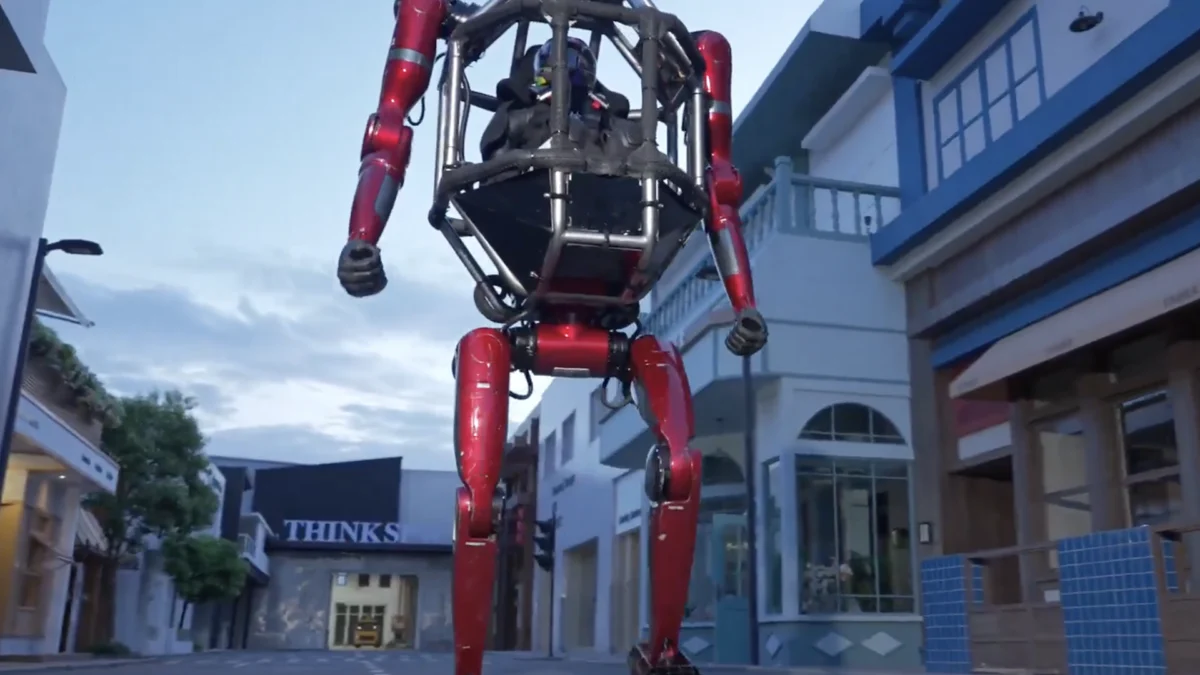
 Chinese robotics company Unitree has introduced what it claims is the world's first manned robot ready for mass production. The GD01 starts at $650,000 and weighs approximately 500 kg with a pilot on board.
 By Chris Borden
 OpenAI has introduced GPT-5.5-Cyber — a specialised variant of its flagship AI model designed for cybersecurity tasks, currently available to a limited group of developers.
 By Chris Borden
 Baidu has introduced Ernie 5.1, a new language model that builds on the pretraining foundation of Ernie 5.0 while using a much smaller architecture.

 By Alex Rowland
 A Bloomberg report shows how generative AI and autonomous agents are accelerating identity theft in the United States — from searching for Social Security numbers on the dark web to creating deepfake driver’s licenses.
By Chris Borden The price of GPT-5.5 has effectively increased sharply compared with GPT-5.4. On paper, the model is twice as expensive: GPT-5.5 costs $5 per million input tokens and $30 per million output tokens, while GPT-5.4 was priced at $2.50 and $15 respectively. OpenAI argues that the increase is partly offset by the model generating fewer tokens. However, an analysis by OpenRouter suggests that this only applies to a limited extent. In real usage, costs rose by 49% to 92% compared with GPT-5.4.
 By Chris Borden
 Anthropic is expanding its AI Claude Managed Agents platform, launched in April, with three new features designed to make AI agents more reliable, easier to evaluate, and better at learning from past work.
 By Chris Borden
 Google DeepMind is acquiring a minority stake in the studio behind the space MMO EVE Online and plans to use the game to test AI models. At the same time, developer CCP Games is buying itself out from its South Korean owner Pearl Abyss for $120 million — less than the $225 million Pearl Abyss paid for the studio in 2018 — and rebranding as Fenris Creations.


 ES
ES  EN
EN